
How to Choose Between Recyclable and Compostable Packaging for Your Product
Sustainability claims sell products, but they also carry risk. Pick the wrong end-of-life path for your packaging, and you either end up with a bag that gets rejected at the recycling facility, or a compostable pouch that most consumers throw straight into the trash because there’s no industrial composting site nearby. Both outcomes undercut the “green” story you’re trying to tell, and in the U.S. specifically, an unsupported claim can put you on the wrong side of the FTC’s Green Guides.
So the real question isn’t “which one is more eco-friendly.” It’s which one actually fits your product, your supply chain, and the market you’re selling into. Here’s how to think through that decision.
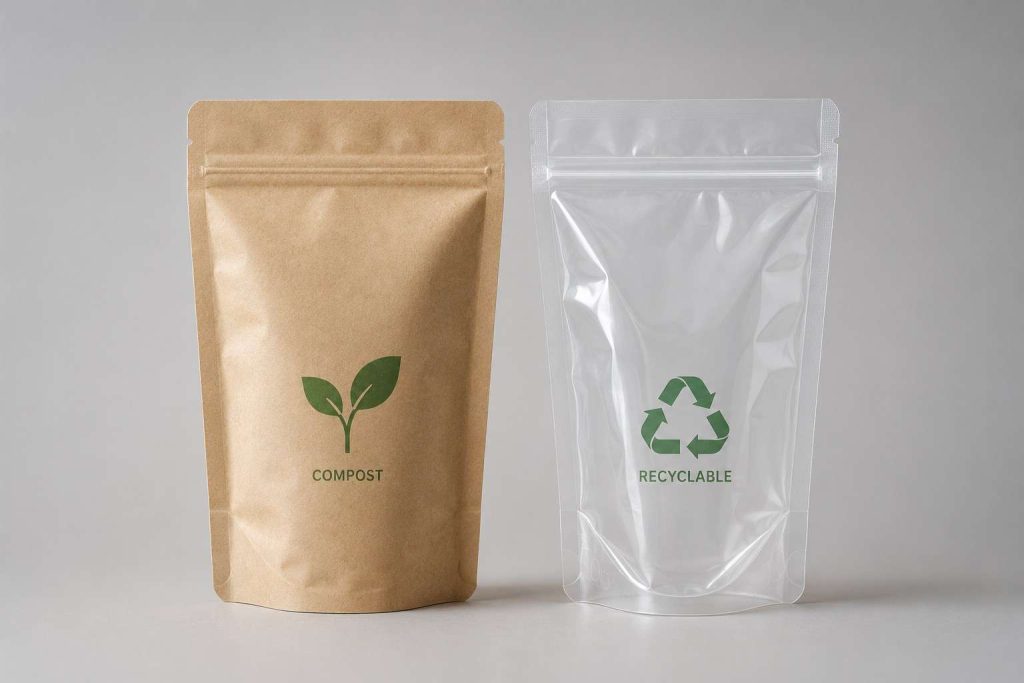
Recyclable vs. Compostable Packaging: What’s the Difference?
Recyclable packaging has to keep its shape through collection, sorting, and reprocessing — the material gets broken down and remade into something new, so it works best when it stays clean and actually makes it into a proper collection stream. Compostable packaging does the opposite. It’s designed to fall apart biologically, turning into water, CO2, and organic matter once it hits the right conditions.
One thing worth knowing upfront: recyclable doesn’t automatically mean it gets recycled. Pouches, wraps, film bags — a lot of these flexible formats carry a “technically recyclable” label, but in practice, very little of that material survives a municipal sorting line without getting pulled out or contaminating the rest of the batch. That’s why the more useful question isn’t “can this be recycled.” It’s “will this actually get recycled where my customers live.”
When to Choose Recyclable Packaging
Recyclable packaging tends to be the better fit when:
- The product is dry and doesn’t leave residue behind, snacks, coffee, pet food, powders. A bag someone can shake out and toss in the bin has a real shot at making it into the recycling stream.
- Your brand wants to support the mechanical recycling system already in place, rather than depend on composting infrastructure that’s still patchy in a lot of regions.
- A mono-material structure is workable for your product. Single-resin films (all-PE or all-PP, for example) are far easier for facilities to sort and reprocess than mixed-material laminates, so if your product doesn’t need a complex barrier structure, this route usually makes more sense on cost too.
When to Choose Compostable Packaging
Compostable tends to win out when:
- The packaging can’t be separated from food or product residue no matter how careful the user is. Think sauce pouches, wet wipes, or anything with oil and moisture built in. Once that kind of residue is present, the recycling path is already compromised anyway, so composting becomes the more honest option.
- Your brand is positioned around natural or organic values, and moving away from conventional plastic is part of the story you’re telling customers.
- You’re selling into a region where industrial composting is actually accessible. This one matters more than people expect — a compostable claim means very little if there’s no facility within reach to process it.
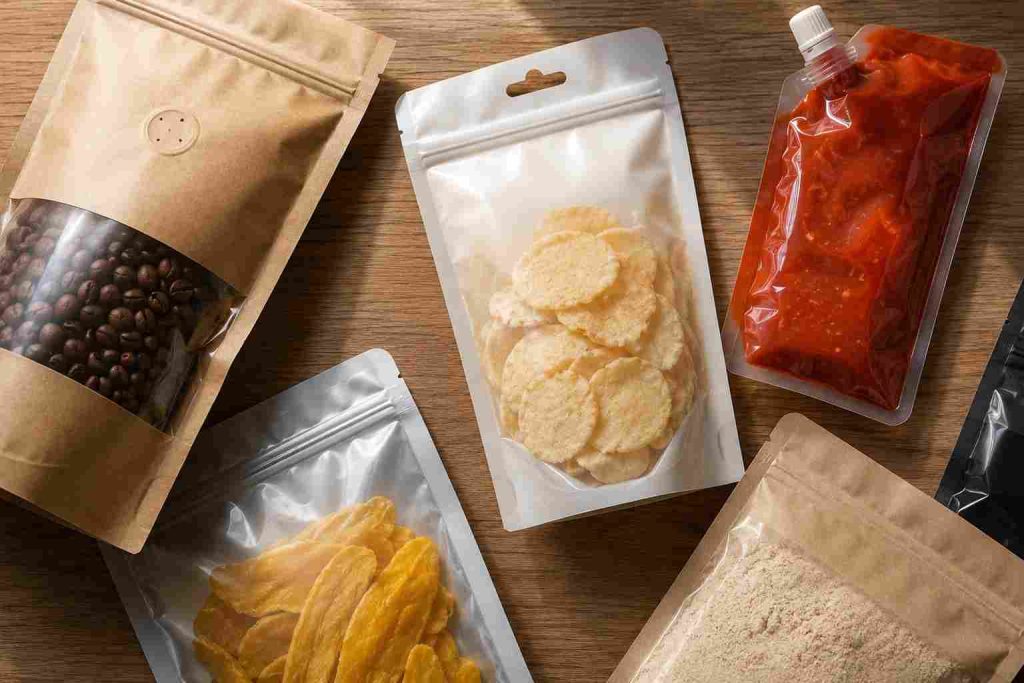
Compostable Packaging Certifications: BPI, ASTM D6400, and EN 13432 Explained
This is where a lot of sourcing decisions go sideways, because “compostable” isn’t one fixed standard. It’s a mix of test methods and certifying bodies, and the details actually matter.
In North America, the two test methods to know are ASTM D6400 and ASTM D6868. D6400 covers materials that are fully plastic or bioplastic such as compostable bags, PLA-based films. D6868 is for packaging that pairs a paper or fiber base with a compostable coating. But passing one of these tests in a lab is one thing, and getting third-party verification is another. That’s where the Biodegradable Products Institute (BPI) comes in — BPI-certified products have already been tested independently against these ASTM standards, and each one gets listed with a license number in BPI’s public database. So if a supplier says their material is “certified compostable,” ask for that license number and check it yourself. Certification covers the specific finished product, not everything else in that supplier’s catalog.
There’s another distinction buyers often miss: industrial versus home compostable. Most BPI-certified packaging only handles industrial composting, which means it needs the higher, controlled heat of a commercial facility to actually break down. Toss it in a backyard compost bin and it won’t behave the same way. If home composting matters for your market, look specifically for a “Home” designation or an equivalent international mark.
Outside North America, EN 13432 is the standard worth knowing, and TÜV Austria’s OK Compost certification is the third-party mark that backs it up across Europe and, increasingly, other regions too. Selling into more than one market means it’s worth checking which certification each one actually expects rather than assuming a single mark will cover them all.
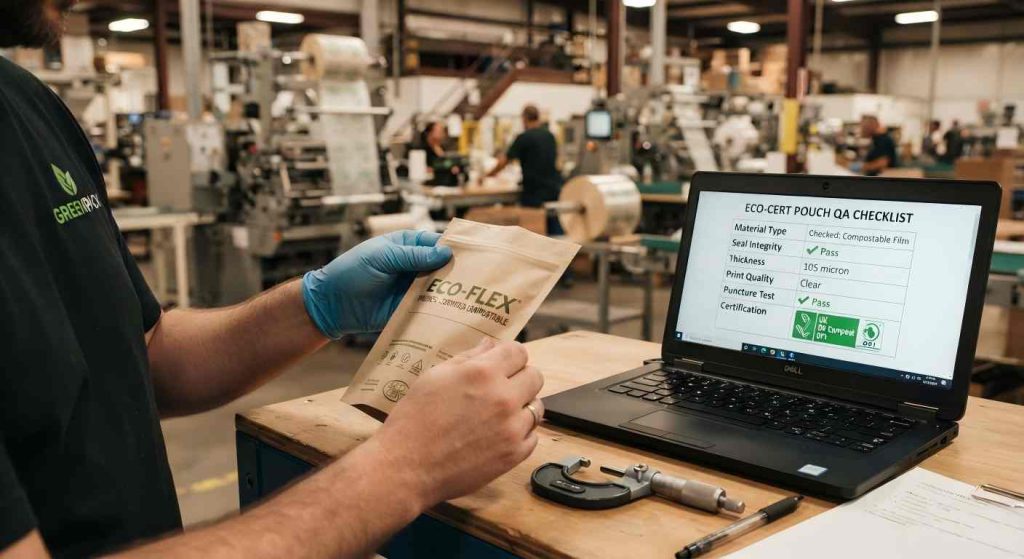
How to Avoid a Greenwashing Claim on Your Packaging
The FTC’s Green Guides put real limits on how a word like “recyclable” can be used on packaging. Just printing a chasing-arrows symbol doesn’t cut it if local facilities won’t actually take the material. The safer move is to be specific instead of general — swap a blanket “eco-friendly” label for something that states the actual disposal path, like “industrial compost only” or “check local recycling availability.” It’s a small change in wording, but it’s what keeps the brand covered if the claim ever gets questioned.
Recyclable or Compostable? A Quick Way to Decide
| Factor | Leans Recyclable | Leans Compostable |
| Product residue | Dry, minimal residue | Food, oil, or moisture-heavy |
| Composting access in target market | Limited or unavailable | Industrial facilities accessible |
| Material structure needed | Mono-material feasible | Complex barrier or laminate needed |
| Brand positioning | Circular economy, supports recycling systems | Natural, plastic-reduction focused |
| Budget sensitivity | Generally lower cost | Typically higher material cost |
If you’re still weighing the two, it’s worth reading through what flexible packaging actually involves structurally, since the film composition you choose often decides which sustainability path is even possible in the first place.
FAQ
Can packaging be both recyclable and compostable?
No. The two paths need opposite material properties. One has to keep its structure intact, the other has to fall apart. So a package built for one job usually can’t do the other reliably.
Is compostable packaging more expensive than recyclable?
Generally, yes. Compostable films still cost more to produce, though that gap has been shrinking as composting infrastructure expands and demand picks up.
Do I need BPI certification if I only sell in the U.S.?
If a compostable claim is going on U.S. packaging, BPI certification is what buyers and regulators expect to see. Without it, that claim is hard to defend if anyone pushes back on it.
What happens if I label packaging “recyclable” without certification?
That’s a direct conflict with the FTC’s Green Guides, which don’t allow claims that aren’t backed by real local recycling access. Beyond the regulatory risk, it’s also the kind of thing that erodes customer trust once people realize the claim doesn’t hold up.