
Gusseted Bags vs Stand-Up Pouches: Which One Fits Your Product?
Picking between a gusseted bag and a stand-up pouch usually comes down to two questions: how much product needs to fit inside, and how much shelf attention that product needs to grab. Get those two answers first, and the rest of the decision — materials, MOQ, cost per unit — tends to fall into place on its own.
This guide breaks down what separates the two packaging styles, how each one is actually made, and which industries lean toward one over the other.
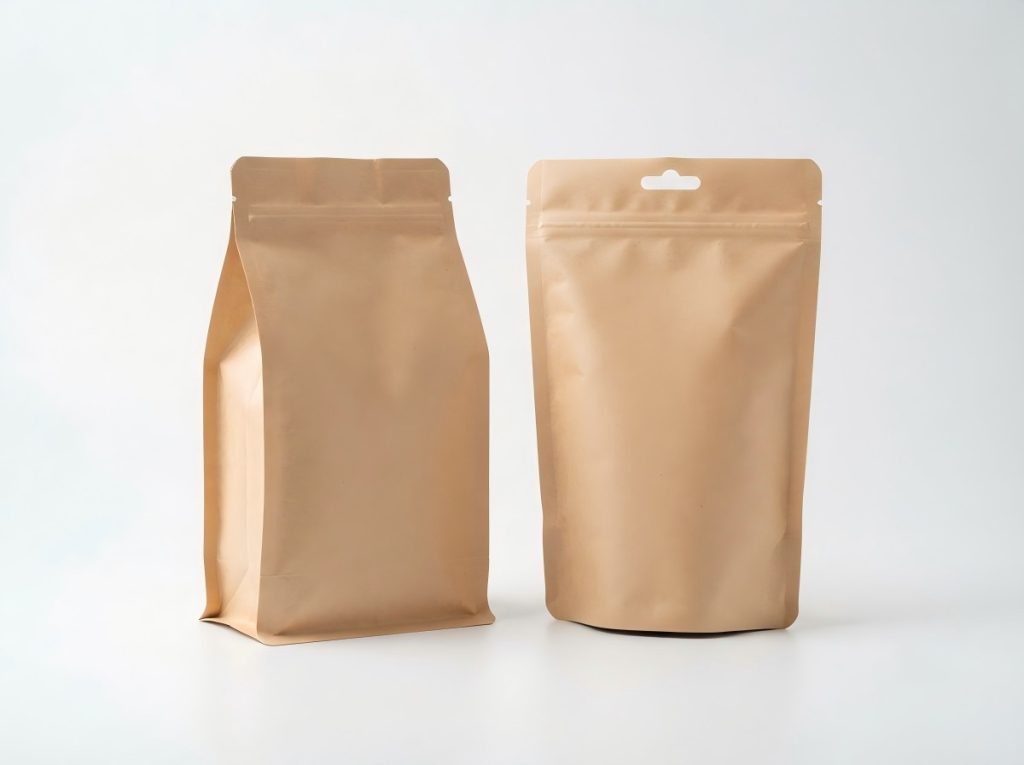
What Is a Gusseted Bag?
A gusseted bag has folded panels built into its sides, which expand outward once the bag is filled. Empty, it lies almost flat. Filled, those side panels open up and the bag takes on a boxy, brick-like shape. This is why gusseted bags are also called side-gusset bags in the packaging trade.
The gusset itself is just a folded section of film, but that fold is what gives the bag depth. More gusset width means more internal volume, which is why these bags show up so often for bulk or heavier products: coffee beans, pet food, granola, hardware components. Materials tend to be sturdier too, often polypropylene or thicker polyethylene blends, since the bag needs to hold its shape once it’s loaded.
What Is a Stand-Up Pouch?
A stand-up pouch, often shortened to SUP, is built to stay upright on its own without any outside support. The structure that makes this possible sits at the bottom — a K-seal or square-bottom gusset that unfolds into a flat base once the pouch is filled.
Where gusseted bags fold at the sides, stand-up pouches fold at the bottom. That single structural difference is responsible for almost everything else that separates the two: how they look on a shelf, how they’re filled, and what they typically cost to produce. Stand-up pouches are the format most people picture when they think of modern snack or supplement packaging, largely because the design puts the label front and center rather than wrapping it around folded panels.
Gusseted Bags vs Stand-Up Pouches
| Gusseted Bags | Stand-Up Pouches | |
| Capacity | Higher — expands significantly when filled | Moderate — limited by bottom gusset size |
| Shelf presence | Functional, less eye-catching | Strong — designed to stand and face outward |
| Typical MOQ | Higher, due to tooling and setup | Lower, faster to produce |
| Unit cost at scale | Lower for large volumes | Slightly higher per unit |
| Common materials | PP, thicker PE, laminated films | PET/PE, PET/AL/PE barrier laminates |
| Best suited for | Bulk, heavy, or dense products | Retail-facing, lighter products |
Neither format wins across every category. A gusseted bag holds more, but a stand-up pouch does more selling on the shelf. The right pick depends on which of those two jobs matters more for the product going inside.
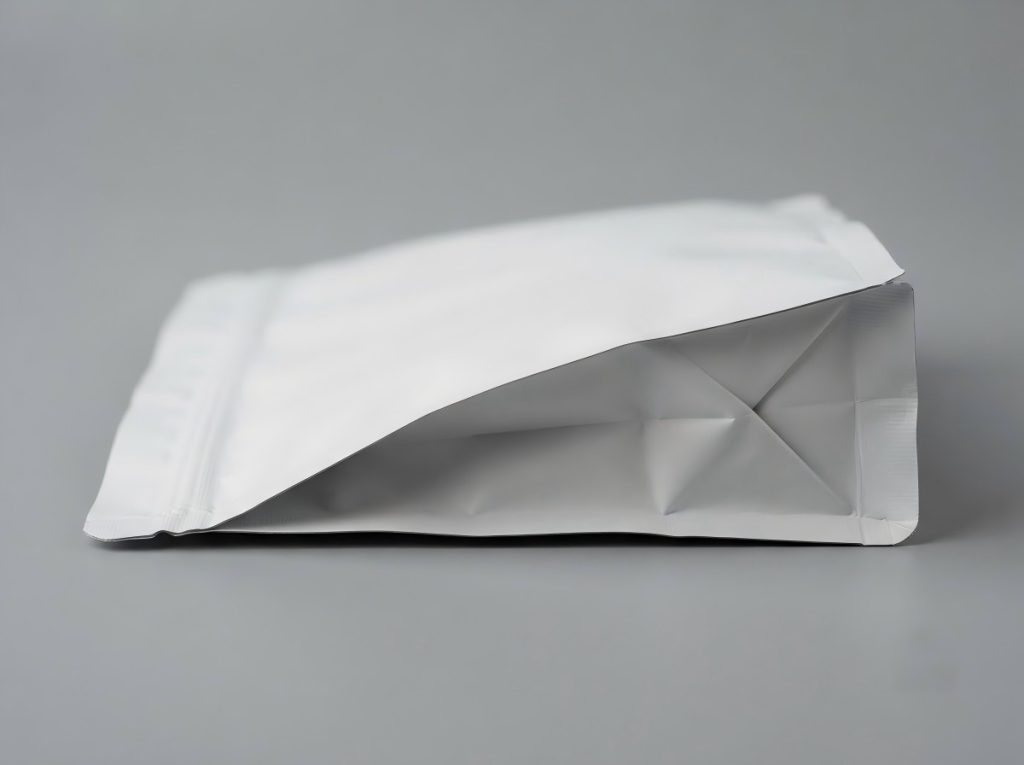
Gusseted Bag vs Stand-Up Pouch Manufacturing
This is where the two formats really part ways, and it’s also where the cost and MOQ differences actually come from, not from the materials themselves, but from how each bag gets built on the production floor.
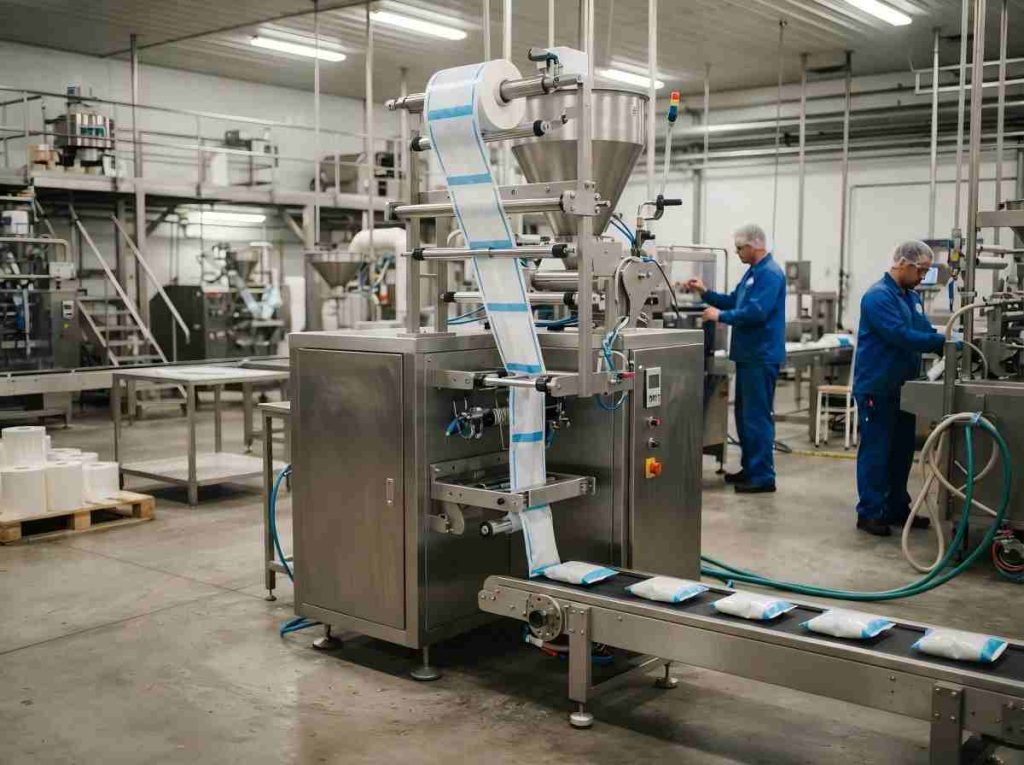
Stand-up pouches are typically run on vertical form-fill-seal lines. The film is formed into shape, filled, and sealed in one continuous pass, which keeps changeover time low and makes it practical to run smaller batches. That’s a big part of why MOQs on stand-up pouches tend to sit lower than gusseted bags — the tooling doesn’t need to be reconfigured as heavily between jobs.
Gusseted bags need more setup. The side folds have to be scored and formed before sealing, and depending on the bag size and gusset depth, that can mean adjusting equipment settings that don’t carry over easily from one order to the next. More setup time means the run needs to be larger to make economic sense, which is the main driver behind higher gusseted bag MOQs. It also explains why lead times on gusseted bags run longer in most cases — there’s simply more happening at the tooling stage before film ever gets filled.
None of this is a knock against gusseted bags. For a product that needs the extra volume, the added setup is worth it. But it’s worth understanding before requesting a quote, since it directly affects both price and turnaround time.
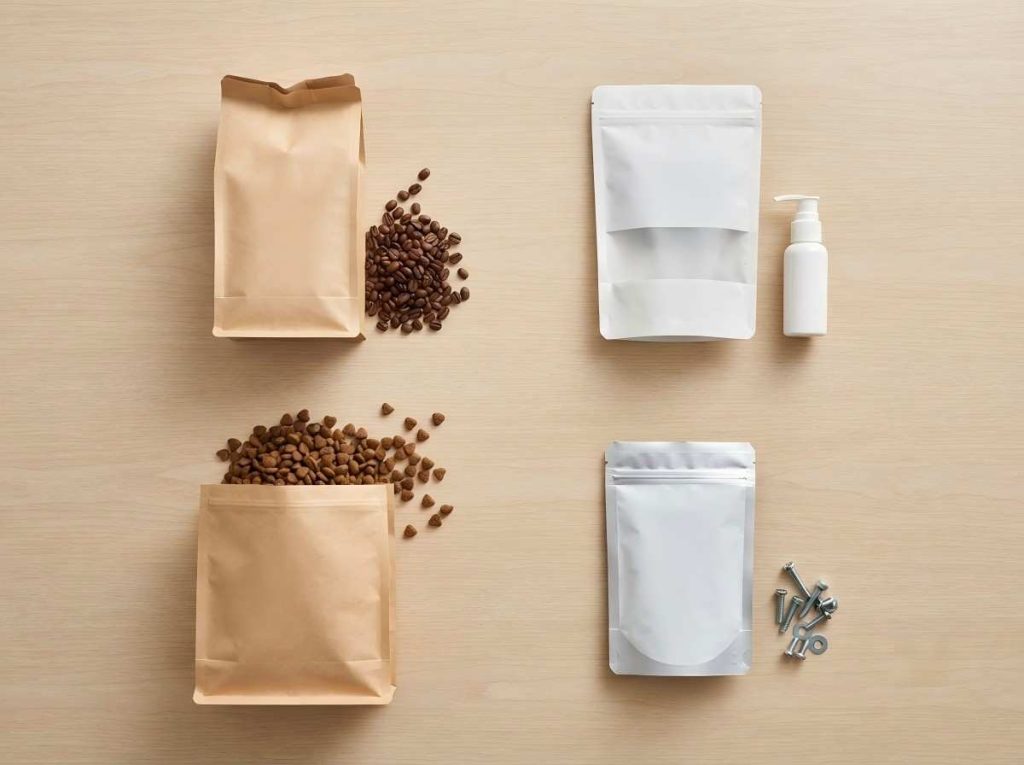
Gusseted Bags vs Stand-Up Pouches: Which Fits Your Industry?
Coffee & Tea
Both formats are common in this category, split mostly by batch size. Roasters packing 250g retail bags usually go with stand-up pouches — the shelf presence helps, and there’s the option to add a degassing valve. Once bags move up to 1kg or foodservice sizes, gusseted construction takes over, since holding more product starts to matter more than how the bag looks on a shelf.
Pet Food & Bulk Dry Goods
Gusseted bags are the go-to here. Kibble, treats, and bulk dry goods carry real weight, and a side-gusset structure handles that better than a bottom-gusset pouch of the same size.
Snacks & Confectionery
Stand-up pouches win this category, mainly because of shelf competition. A pouch standing upright with the label facing out simply gets noticed faster than a bag lying flat next to it.
Cosmetics & Personal Care
Stand-up pouches are the default choice, especially with resealable zippers or spouts built in. Volumes tend to run smaller here, and how the product looks on a counter or shelf matters more than how much it can hold.
Hardware & Small Parts
Gusseted bags make more sense for this category. These products rarely need shelf appeal, so what matters is durability, holding irregular, heavier items without stressing the seams.
Gusseted Bag vs Stand-Up Pouch Cost and MOQ Comparison
Gusseted bags generally cost less per unit once an order reaches a large enough volume, but getting there takes a bigger minimum order. Stand-up pouches work the other way around — per-unit cost runs slightly higher, but the entry point is lower, which suits a smaller brand testing a new product or running a limited release.
Exact pricing still depends on film structure, size, and printing method. It’s worth requesting quotes for both formats side by side before committing, since the gap between them isn’t always as wide as assumed, especially at mid-range order volumes.
Which Is More Sustainable: Gusseted Bags or Stand-Up Pouches?
Both formats can be produced in mono-material structures, which simplifies recycling compared to multi-layer laminates that mix different plastics. Stand-up pouches have generally moved faster toward recyclable mono-PE or mono-PP options, partly because the format’s popularity in retail has pushed brands to look for greener alternatives. Gusseted bags are catching up, though the thicker materials often used for bulk products can make a fully recyclable structure a bit harder to engineer without sacrificing strength.
If sustainability is a deciding factor, it’s worth asking a packaging supplier directly which structures are available in recyclable film for the specific product weight and barrier requirements involved.
Not sure which format fits your product yet? Our team can walk through sizing, materials, and MOQ based on what you’re packing — get in touch for a quote, or check out our guides on measuring a stand-up pouch and filling stand-up pouches if you’re still comparing options.
FAQ
Can a bag have both side and bottom gussets?
It happens, but rarely. Combining both types adds enough manufacturing complexity that most producers skip it unless there’s a specific structural need.
Which is cheaper, gusseted bags or stand-up pouches?
Order size decides that. Gusseted bags tend to be cheaper per unit at high volumes, while stand-up pouches usually work out better for smaller runs.
Do gusseted bags stand up on their own when empty?
Not really. Side-gusset bags lie fairly flat until they’re filled — that’s when the panels expand and the bag holds itself upright.
What industries use gusseted bags most?
Coffee, pet food, agricultural products, and hardware show up most often, since these products tend to benefit from the extra volume a side gusset gives.