
How Many Cups of Coffee in 12 Oz Bag? A Simple Breakdown
You are probably here to plan your coffee buying. Maybe you just opened a fresh bag. And now you’re wondering how long it’s going to last. Either way, the question is the same: how many cups of coffee in 12 oz bag?
The bag says 12 ounces. That’s about 340 grams.But the real number? It moves around. It depends on your taste. It depends on how you brew. Most sites will tell you “17 to 24 cups” and stop there. We’re not doing that.
Here, you’ll get exact numbers. Based on real cup sizes. Different brew ratios. Even how your packaging changes things. Plus a simple three step method you can use right now. No guessing.
The Quick Math: How Many Cups of Coffee in 12 Oz Bag?
Let’s start simple. So grab a standard 8 ounce cup. That’s about 236 ml, just so we’re clear. Then there’s that golden ratio people talk about – 1:16. One part coffee, sixteen parts water. Use that, and your 12 oz bag will give you roughly 23 cups.
But hey, maybe you like it stronger. That’s fine too. Or your favorite mug is bigger. Then the real number could be anywhere from 11 to 34 cups. Here’s a table to help you see the range.
| Your taste preference | Coffee per cup (based on 8 oz water) | Total cups from 12 oz bag (8 oz cups) | Best for |
| Mild (1:18 ratio) | roughly 13 grams | about 26 cups | Drip machine, cold brew, light taste |
| Standard (1:16 ratio) | roughly 15 grams | about 23 cups | Pour over, Clever dripper – most people |
| Strong (1:14 ratio) | roughly 17 grams | about 20 cups | French press, AeroPress – bold and rich |
| Espresso (1:2 ratio) | not per cup; 18-20g per shot | about 17 shots (40-60 ml each) | Espresso machine |
One more thing before we move on. When I say “cup” here, I mean 8 fluid ounces of finished coffee. That’s about 236 ml. If you’re using a 12 oz travel mug, the “standard” row above drops to about 15 cups. Because each mug needs more grounds. We’ll cover all the factors that change your cup count in a minute.
What Changes How Many Cups You Get?
That table is a good start. But in real life, how many cups of coffee in a 12 oz bag can shift a lot. It comes down to a few things. How much coffee you actually use per cup. Whether you measure with a scale or a spoon. And even how your packaging keeps – or loses – freshness.
How Much Coffee Do You Need Per Cup?
The key is the brew ratio. That’s just the coffee to water proportion. Think of it like cooking rice. The more coffee you use, the stronger the cup. And the faster you go through the bag.
The usual starting point is 1:16. One gram of coffee for every 16 grams of water. But different brewing methods change that.
- Pour over or drip machine: Most people use between 1:15 and 1:17.
- French press: Usually 1:12 to 1:15. Why? Because it uses a coarse grind. Coarse grinds don’t extract as well, so you need a bit more coffee.
- Cold brew: Often made at 1:8 to make a concentrate. Then you dilute it when you drink. So per finished cup, you’re using about twice as much coffee.
Here’s something a lot of people miss. Grind size matters too. Grind finer – like for espresso – and you extract more flavor. So you might need 5 to 10 percent less coffee to get the same strength. Grind coarser – like for French press – and you might need 10 percent more. The simple takeaway? If your grinder lets you adjust, match it to your brewer. You’ll waste less coffee. And your cup will taste better.
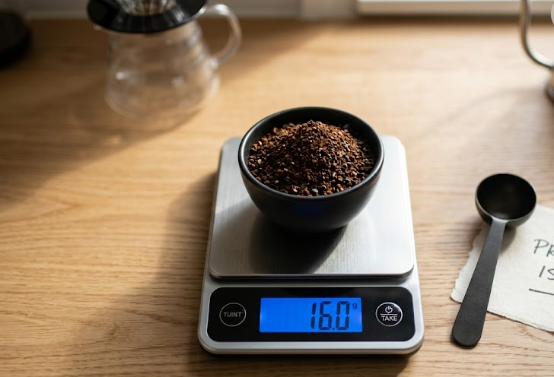
Practical tip. Ratios can feel like a headache, I know. So here’s a simple rule. For every 8 ounces of water – that’s 236 ml – use about 2 tablespoons of ground coffee. That’s it. That gets you close to a standard strength. But here’s the thing. Spend twenty bucks on a kitchen scale. Once you start weighing instead of scooping, your cup count becomes way more consistent. You’ll notice the difference.
How Many Tablespoons Are in a 12 Oz Bag?
No scale at home? That’s fine. A spoon can work. You just need to know the range. A 12 oz bag usually holds somewhere between 24 and 28 tablespoons. Why such a range? Bean density.
Light roast beans are denser. They don’t spend as long in the roaster, so the structure stays tighter. One tablespoon of light roast? Usually weighs 7 to 8 grams.
Dark roast beans are fluffier. One tablespoon of dark roast? More like 5 to 6 grams.
So here’s what that actually means for you. Let’s say you scoop a full tablespoon every time. With a light roast, that 12 oz bag might give you only 24 or 25 tablespoons. Same bag, but dark roast? You could get 27 or 28. Big difference, right? So if you’re only using spoons and never weighing, you could be off by 2 or 3 grams per cup. Without even realizing it. And you wouldn’t even notice. That little error can throw off your whole bag estimate by 2 to 4 cups.
Better approach: Scoop your usual spoonful once. Then weigh it on a kitchen scale. Remember that number – “my level scoop is 7 grams” or whatever it is. After that, even without the scale, you know exactly how many grams you’re using per cup. Then you can calculate the bag’s total cups without guessing.
Why Packaging Style Impacts Bean Longevity
Fresh coffee needs to degas. That means it releases carbon dioxide for days after roasting. If you’re using a simple plastic bag or a paper bag without a one way valve, that CO₂ stays trapped. Or worse, oxygen gets in. Either way, your coffee ages fast.
Packaging affects your “real cup count” in two specific ways.
First, the freshness window. After you open a bag, coffee flavor starts to go downhill noticeably in 7 to 10 days. When the taste fades, many people unconsciously add more coffee – say, going from 15 grams to 18 grams – to “push” the flavor. That means the second half of the bag gets used up faster. The actual number of good cups can drop by 3 to 5 cups compared to the theoretical number.
Second, leftover grounds (residual loss). With regular stand up pouches (side gusset bags), you often can’t get the last bits out. About 2 to 5 grams stay stuck in the corners. That’s only about 1% of a 340g bag, but it still adds up. Flat bottom pouches or angled designs help reduce that waste.
Here’s a quick comparison of how packaging changes the real cup count (starting from the theoretical 23 cups):
| Packaging type | One-way valve | Resealable | Flavor stability after opening | Estimated real cups (including loss) |
| Plain kraft bag (no liner) | No | No | 5-7 days | roughly 18-20 cups |
| Aluminum foil bag with valve (no zipper) | Yes | No | 8-10 days | roughly 20-21 cups |
| Valve bag + zipper | Yes | Yes | 14-21 days | roughly 22-23 cups |
| Vacuum brick (one-time seal) | No | No (once opened) | must transfer to a canister | about 21 cups (some aroma loss during transfer) |
So picking the right Coffee Bag Sizes and bag design isn’t just about looks. It helps keep your 12 oz fresh from the first cup to the last. That way you actually get every cup you calculated.
Easy Ways to Keep Your Coffee Fresh
If you want your coffee to last, you’ve got four enemies to deal with. Oxygen. Moisture. Light. And heat. Let me give you a real example, so you see why this actually matters.
Here’s a real case. Someone bought two identical 12 oz bags. He left the first one in its original valve sealed bag with a zipper, stored in a dark cupboard. The second bag he poured into a clear glass jar and put it right next to the stove. After 10 days, he brewed both. The glass jar coffee had a clear cardboard like, stale taste. The sealed bag coffee still smelled and tasted fresh. To get a decent flavor from the glass jar batch, he had to use 3 extra grams per cup. In the end, that poorly stored bag gave him only 18 cups of enjoyable coffee, while the properly stored one delivered the full 23 cups.
Now here’s a checklist of what actually works.
Skip clear containers. Light destroys the oils and aromatic compounds in coffee. Use an opaque airtight container, or just keep the coffee in its original bag if it’s good quality.
Seal it tight. Oxygen is the biggest flavor killer, no question. You know how an apple slice goes brown after you cut it? That’s oxidation. Same deal with coffee. So here’s what you do. Every time you scoop out some beans, squeeze the air out of the bag and close the zipper. No zipper on your bag? Then move the coffee to a zipper bag or a sealed canister. Simple as that.
So here’s what you want: cool, dry, and dark. That means don’t put your coffee next to the stove. And please, not the fridge. Also, definitely not on a sunny windowsill. The fridge? That thing brings moisture and odors. Plus, every time you open it, condensation sneaks into the beans. The best spot? Inside a cupboard. Away from any heat source.
Freeze in portions, but only if needed. Bought several bags? Or you know you won’t finish a 12 oz bag within two weeks? Then split it into smaller portions. Each portion should be about a week’s worth. Vacuum seal them or use tight freezer bags, then freeze. One rule: only freeze once. Don’t thaw and refreeze. When you need coffee, take one portion out and grind it frozen – no need to thaw. This keeps the flavor surprisingly well.
FAQ
What’s the 15-15-15 rule?
Here’s a simple way to think about freshness. Coffee tastes best within 15 days after roasting. That’s the sweet spot. Once you grind it? You’ve only got about 15 minutes before the flavor starts to fade. And after you brew it? Try to drink it within 15 minutes. Now for your 12 oz bag – check the roast date on the package. Aim to finish it within three weeks. If you’re drinking two cups a day, you’ll go through that bag in about 11 or 12 days anyway. So you’re well inside that window.
What’s the 90 minute rule about?
This one isn’t about freshness. It’s about caffeine timing. Some experts say you should wait 90 minutes after waking up before your first coffee. Here’s why. Your body naturally produces cortisol in the morning to help you wake up. Drink coffee right away and you can mess with that natural cycle. That often leads to an afternoon crash. So try delaying that first cup by about an hour and a half. You might find you need less coffee overall. And that means your 12 oz bag lasts longer.
What ruins coffee beans the most?
Four things: oxygen, moisture, heat, and light. Oxygen is the worst. It turns the bean oils rancid, and you get that stale cardboard taste. That’s why good coffee bags have a one way valve. The valve lets carbon dioxide escape – fresh beans release CO₂ – but keeps oxygen from getting in. Without that, your beans go bad fast.
Can I drink coffee if I have high blood pressure?
Here’s the thing. For most people, one or two cups a day is perfectly fine. That’s about 200 to 300 milligrams of caffeine. Nothing crazy.
But if you’ve got high blood pressure? You don’t have to give up coffee. Just make a few small tweaks. Go for dark roasts. They actually have a little less caffeine than light roasts. Don’t drink on an empty stomach. And try not to go over two cups at once.
Now, here’s something to think about, tying back to how many cups of coffee in 12 oz bag. If you cut down to just one cup a day, that same bag will last you 23 days. That’s easier on your wallet, and easier on your system too.
When should I stop drinking coffee for the day?
A good rule is to stop 6 to 8 hours before you go to bed. Caffeine has a half life of about 5 hours in your body. So if you sleep at 11 PM, your last coffee should be no later than 5 PM. Drink it later and your deep sleep gets disrupted. Then you wake up more tired. And when you’re tired, you drink more coffee. That burns through your 12 oz bag faster. So keep coffee to the morning and early afternoon. You’ll get more good cups out of every bag.
Need Custom Packaging for Your Coffee?
Whether you’re a home coffee lover or a roaster building a brand, understanding what a 12 oz bag really delivers is step one. When your business grows, high quality packaging becomes a huge part of your brand’s reputation.
A flat bottom bag with a one way valve, high barrier layers, and a resealable zipper does more than look good. It keeps your customer’s coffee fresh from the first brew to the last. And when they actually get the how many cups of coffee in 12 oz bag experience you promised, they come back. That builds loyalty.
Check out our Wholesale Coffee Bags options. We offer eco-friendly materials – things like compostable foil and kraft paper laminates. Sizes from 12 oz up to 2 lb and 5 lb. Plus custom printing. Good packaging does two things: it protects freshness, and it gives your product a professional edge. Let’s talk.