
Poly Mailer Sizes Guide: How to Choose the Perfect Size for Your Business?
In the daily operations of independent websites (DTC) and cross-border e-commerce brands, packaging is far more than just the first line of defense protecting your products, it is a critical lever for controlling logistics costs and elevating the customer unboxing experience. Among the vast array of packaging materials available, poly mailers have become the go-to choice for global sellers due to their unmatched cost-effectiveness.
Faced with a dizzying variety of poly mailer sizes on the market, how do you choose the right one to eliminate wasted shipping fees while ensuring your products arrive undamaged? Combining the latest international logistics trends, this comprehensive guide on shipping bag dimensions will help you select the perfect fit and drive down operational costs.
What are Poly Mailers?
Poly mailer bags are lightweight poly bags made from Polyethylene (PE). They are commonly used in the e-commerce and logistics industry. Waterproof, moisture resistant, tear resistant, light in weight and extremely economical; they offer product protection with minimal shipping costs.
Poly mailers are way more lightweight, easy to store, and more efficient than cardboard boxes. Plus, they also provide an option for custom printing. This makes them a great choice when it comes to displaying your logo and marketing message. Due to this reason, they are used for the shipment of apparel, footwear, cosmetics, and documents.

Why Choosing the Correct Poly Mailer Size Matters?
Getting the right poly mailer size will not just protect your products; it will also help you save on your packaging and shipping expenses. For both online business owners and logistics companies, the right size helps speed up the delivery process.
Reduce Shipping Costs
In modern international logistics (such as USPS, FedEx, DHL, etc.), the calculation of “dimensional weight” (DIM weight) has become increasingly strict. If your poly mailer sizes are too large, the bags will trap unnecessary air, artificially inflating the package’s volume. This leads to carriers hitting you with significantly higher shipping fees.
Protect Products Better
Proper sizing is the foundation of product protection. If a mailer is too small, it will be stretched to its absolute limit, making it highly prone to bursting under the tossing and squeezing inherent in long-distance cross-border transit. Conversely, if the bag is too large, products will shift and slide excessively inside, leading to friction damage or product deformation.
Improve Customer Experience
Imagine an overseas customer receiving a massive, floppy, mostly empty bag, only to find a single piece of underwear inside. What kind of cheap impression does that leave? On the flip side, a perfectly fitted, neat, and flat package instantly elevates your brand image and drives repeat purchases.
Minimize Packaging Waste: The use of right-sized packaging results in lower consumption of plastic materials and does not require any additional fillers to be used. This will help reduce costs while meeting today’s consumer demands for environmentally friendly packaging.
Optimize Warehousing and Fulfillment Process: Standardization of poly mailer size allows the company to speed up the packaging and shipping process since there is no need for measuring the size anymore.
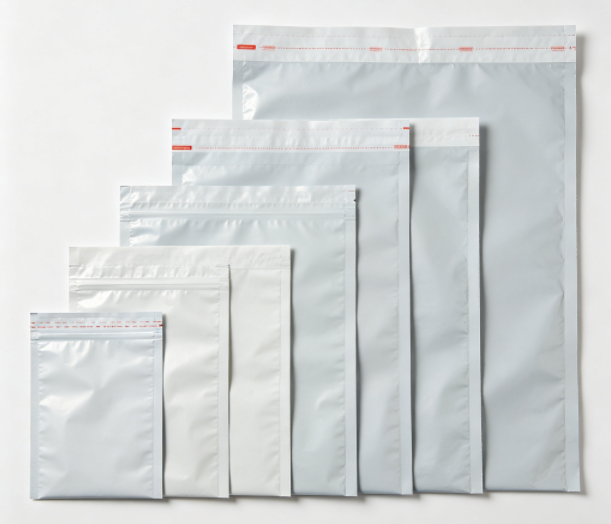
Standard Poly Mailer Sizes Chart
To help you in the process of planning your inventory, here is a list of the most frequently used standard poly mailer sizes and their applications.
Note: Actual measurements may differ by a few millimeters from those provided according to the manufacturer of the packaging material. It is very important to test before making bulk purchases.
| Poly Mailer Size (Inches) | Category | Common Use Cases |
| 6 x 9 in | Small | Jewelry, single makeup items, socks, phone cases |
| 7.5 x 10.5 in | Small | 2–3 summer T-shirts, silk scarves, makeup sets |
| 9 x 12 in | Medium | Business documents, standard books, summer dresses |
| 10 x 13 in | Medium-Large | Shirts, hoodies, standard apparel, hardcover books |
| 12 x 15.5 in | Large | Thick sweaters, jeans, light jackets |
| 14.5 x 19 in | X-Large | Thick winter jackets, suits, boxed sneakers |
| 19 x 24 in | Jumbo | Blankets, 4-piece bedding sets, oversized plush toys |
Poly Mailer Size Guide by Product Type
Below are the practical, real-world recommendations most frequently searched by overseas buyers and e-commerce sellers. Your operations team can use these directly as standard packing guidelines:
Clothing & Accessories
| Product | Recommended Size | Notes & Remarks |
| Socks & Underwear | 6 x 9 in | Ideal for 1–3 pairs of socks, underwear, or a single piece of lightweight lingerie. |
| Swimwear / Bikinis | 7.5 x 10.5 in | Perfect for a single swimsuit, bikini set, or beach cover-up. |
| T-shirt | 10 x 13 in | The most versatile apparel size; perfectly fits a single short-sleeve or long-sleeve T-shirt. |
| Polo Shirt & Blouse | 10 x 13 in | Fits standard folded collared polo shirts and women’s blouses. |
| Dress / Skirt | 10 x 13 in | Fits regular summer dresses, skirts, and chiffon maxi dresses. |
| Jeans & Pants | 10 x 13 in or 12 x 15.5 in | Use 10×13 for a single pair of lightweight jeans/casual pants; upgrade to 12×15.5 for heavyweight or thick denim. |
| Hoodie & Sweatshirt | 12 x 15.5 in | Thick fabrics and hooded items require more width and a higher margin for error. |
| Sweater / Knitwear | 12 x 15.5 in | Suitable for knitwear and regular-thickness sweaters (press out excess air when packing). |
| Winter Jacket & Coat | 14.5 x 19 in | Tailored for windbreakers, regular jackets, lightweight down coats, and other bulkier items. |
| Heavy Puffer Jacket & Suit | 19 x 24 in | For heavy, long winter coats, puffy down jackets, or suits that need to remain flat. |
Shoes & Footwear
| Product | Recommended Size | Notes & Remarks |
| Flip-Flops & Slippers | 9 x 12 in | Fits flat flip-flops or house slippers shipped without a shoebox. |
| Sandals & Flats | 12 x 15.5 in | Sandals and flat shoes can be easily packed into a medium-large bag if folded or shipped without a box. |
| Sneakers & Running Shoes | 14.5 x 19 in | Designed for shipping standard, full-sized running shoes and sneakers inside their standard shoebox. |
| Ankle Boots / High Heels | 14.5 x 19 in | Fits short boots and high heels packed in small-to-medium shoeboxes. |
| Tall Boots / Snow Boots | 19 x 24 in | Tall boots and heavy snow boots usually come in large boxes, requiring a jumbo mailer. |
Cosmetics & Beauty
Attention: Cosmetic items are often bottled liquids or fragile powders. It is highly recommended to use Bubble Mailers (lined with bubble wrap) or ensure the product itself comes in a sturdy, shock-resistant retail box.
| Product | Recommended Size | Notes & Remarks |
| Lipstick & Eyeliner | 6 x 9 in | Perfect for slender, single items like lipsticks, eyeliners, and mascaras. |
| Skincare Single Bottle | 6 x 9 in | Fits a single bottle of face cream, lotion, facial serum, or eye cream. |
| Makeup Palettes | 7.5 x 10.5 in | Fits flat solid cosmetics like eyeshadow, highlighter, or contour palettes. |
| Makeup Brush Sets | 7.5 x 10.5 in | Ideal for full makeup brush sets or beauty blender combos. |
| Cosmetic Gift Sets | 9 x 12 in or 10 x 13 in | Fits multi-piece skincare gift sets (toner/lotion bundles) or holiday makeup collections. |
| Haircare / Body Wash | 10 x 13 in | Suitable for large-capacity shampoos or body washes with pump heads (reinforce the pump to prevent leaks). |
Books, Documents & Media
| Product | Recommended Size | Notes & Remarks |
| Standard Documents / Certificates | 9 x 12 in | Perfectly fits A4 sheets, contracts, and certificates, ensuring edges don’t get creased. |
| Paperback Books & Comic Books | 10 x 13 in | Great for shipping a single book or 2–3 regular paperbacks/comic books. |
| Hardcover Books / Textbooks | 10 x 13 in or 12 x 15.5 in | Large hardcover books or heavy college textbooks increase package thickness; sizing up is recommended. |
| Vinyl Records (LP) | 14.5 x 19 in | Vinyl records (typically 12×12 in) should be reinforced with stiff cardboard inserts and shipped in a larger bag. |
| Art Prints & Posters | 9 x 12 in or 14.5 x 19 in | Flat art prints and posters (if not rolled into a poster tube) require heavy cardboard backing to prevent bending. |
How to Measure Products for Poly Mailers?
Many sellers buy the wrong mailer size because they only measure the product’s length and width while ignoring its thickness. Once an item is placed inside a mailer, its thickness consumes both the length and width of the bag. Follow this strict 4-step measurement methodology:
Step 1 (Measure Length): Fold and compress the product into its final shipping state. Lay it flat on a table and measure its maximum Product Length.
Step 2 (Measure Width): In the same state, measure its maximum Product Width.
Step 3 (Measure Thickness): Measure the actual Product Thickness at its highest natural point. For puffy clothing, press down slightly with your hand to remove false volume.
Step 4 (Add Margin): Because poly mailers have no elastic side gussets, the item will distort the bag as it expands. You must add an extra 0.5 to 1 inch (or roughly 10%–20%) of clearance space as a buffer to prevent the bag from bursting.
Recommended Universal Formulas:
Plug your measurements into the formulas below to lock in your required poly mailer dimensions (in inches):
- Required Poly Mailer Width = Product Width + Product Thickness + 1in (Buffer Margin)
- Required Poly Mailer Length = Product Length + Product Thickness + Closure Flap (typically 1.5–2 in)
Real-World Example:
Say you are measuring a folded, thick hoodie with the following dimensions: Length = 12 in, Width = 9 in, Thickness = 2.5 in.
Calculate Bag Width: 9in (Width) + 2.5in (Thickness) + 1in = 12.5 inches
Calculate Bag Length: 12in (Length) + 2.5in (Thickness) + 1.5in (Flap) = 16inches
Selection Conclusion: The math shows you need a mailer that is at least 12.5 x 16 inches. Looking at the standard size chart, the closest and safest match is a 14.5 x 19 inch (X-Large) mailer.
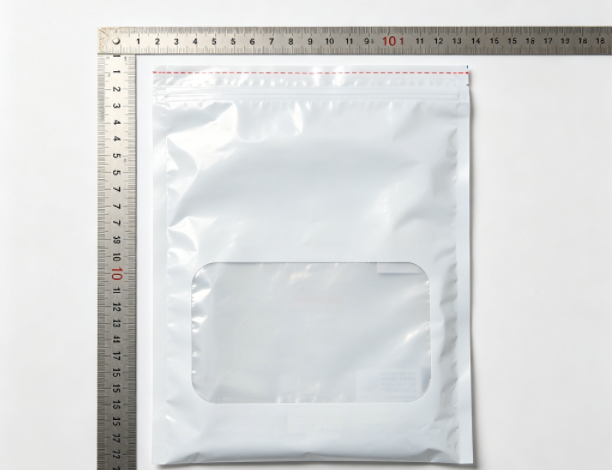
Custom Poly Mailer Sizes vs. Standard Sizes
Once an e-commerce business hits a certain scale, it faces a strategic fork in the road: stick with standard off-the-shelf bags or transition to custom packaging?
Advantages of Standard Sizes:
Bottom Price Points: Manufactured in mass quantity on automated assembly lines in factories, maintaining per unit prices extremely low.
Ample Supply: Easily accessible from suppliers, and therefore never worry about a lack of inventory to fulfill your order.
Instant Shipping: Never wait for production lines to operate; products will be shipped immediately.
Advantages of Custom Sizes:
No Waste of Space: This packaging is designed to be an exact fit for the top-selling products of your company, making sure that no extra space is wasted.
Improve Your Image: With full-bleed printing, you can print your logo, your company name, as well as your social media accounts and slogans.
Best for Odd-Shaped Objects: This packaging is perfect for narrow objects.
Who Should Customize?
Custom sizes come with higher Minimum Order Quantities (MOQs). They are best suited for mature e-commerce brands, DTC brands, and high-volume shippers. At scale, custom packaging ceases to be a mere expense; it turns into a highly mobile billboard for your brand.
Common Mistakes When Choosing Poly Mailer Sizes
1. Choosing Oversized Mailers
Some sellers take a “one size fits all” approach, assuming a massive bag will cover everything. This not only inflates your packaging procurement costs but also forces you to pay exorbitant, unnecessary logistics premiums due to bloated dimensional weight.
2. Ignoring Product Thickness
This is the ultimate packing fail. On paper, the length and width seem perfect. But once the product goes in, its thickness stretches the bag so wide that the adhesive strip on the flap cannot reach down to seal it shut.
3. Not Considering the Return Experience
In Western markets, return rates, especially in fashion, are notoriously high. Elite e-commerce brands use mailers equipped with Dual Adhesive Strips. This allows customers to easily reseal and return items using the second adhesive line without destroying the bag, protecting both the return experience and the merchandise itself.
4. Forgetting Seasonal Product Changes
Apparel sellers fall into this trap constantly. They sell T-shirts all summer long and stock up exclusively on 10×13-inch mailers. When autumn arrives and they pivot to hoodies and outerwear, the operations team blindly orders the same size out of habit, only to realize the new inventory cannot physically fit into the bags once it hits the warehouse.
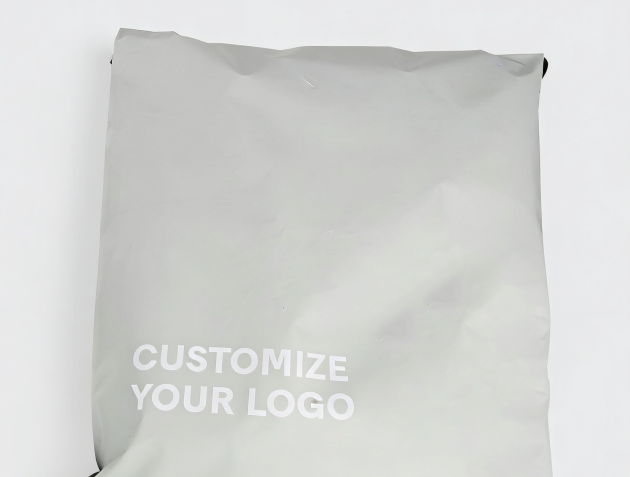
How Businesses Can Optimize Packaging Costs with the Right Poly Mailer Sizes?
With an emphasis on logistics in B2B companies and bulk international sellers, optimizing your poly mailer size can reap huge benefits in four different ways:
Reduce Wastage of Packaging Materials: An inch of unnecessary material removed here and there will save you tons of money on your company’s purchasing costs when you multiply by the number of units shipped annually.
Significantly Reduced Transportation Costs: More efficient packaging means that more packages can be packed onto one single pallet or cargo shipper, thus allowing you to fall into the smaller cost ranges for freight by sea, air, and last mile.
Enhance Space Utilization In Your Warehouses: Efficient poly mailers will take 70 percent less rack space in your warehouses compared to regular boxes.
Faster Order Filling: With an efficiently sized mailer, no packing of edges or stuffing in extra filler material is necessary to pack orders, thus speeding up order fulfillment process.
Frequently Asked Questions
Q: What is the most popular poly mailer size? A: The 10 x 13 inch mailer is universally recognized as the golden standard in e-commerce. It completely dominates apparel logistics, as it is perfectly compatible with almost any single adult top, skirt, or standard daily essential.
Q: Can poly mailers be used for fragile products? A: Standard plastic poly mailers offer zero shock absorption. If you intend to ship fragile items, you must wrap them heavily in bubble wrap first, or switch entirely to Poly Bubble Mailers, which feature built-in bubble-lined walls.
Q: What size poly mailer is best for T-shirts? A: In most cases, 10 x 13 inches is the safest and most reliable size. However, if your shirts are highly lightweight and your folding process is tightly optimized, dropping down to a 7.5 x 10.5 inch bag is an excellent way to shave off extra costs.
Q: Are custom poly mailer sizes worth it? A: It depends entirely on your shipping volume. If you are moving thousands of orders a month and your core product sizes are highly consistent, the dimensional weight savings and brand premium generated by custom packaging will quickly outpace the initial upfront customization costs.
Conclusion
Mastering the logic behind poly mailer sizes is a critical step for any cross-border e-commerce brand transitioning toward lean, data-driven operations. By applying scientific measurement formulas, balancing standard inventory with custom sizing, and planning ahead for seasonal shifts, you do more than just protect your products; you carve out fresh profit margins in a highly competitive global market. Grab your tape measure and take another look at your packaging procurement list today!