
Custom Poly Mailer Bags with Logo: How to Create a Viral Unboxing Experience?
In today’s increasingly fierce e-commerce red ocean, every touchpoint with consumers is a golden marketing opportunity for brands. When buyers receive their long-awaited packages, the first thing they see isn’t the product itself; it’s the packaging.
Ordinary white or gray shipping bags will only cause your brand to drown in countless packages. A beautifully designed custom poly mailer bag with a logo acts as a “walking billboard” throughout the offline transit process, instantly elevating your brand’s professionalism and the unboxing experience.
This comprehensive guide will break down why custom poly mailers are the top choice for e-commerce sellers, how to design eye-catching brand packaging, and how to choose cost-effective suppliers.
What Are Custom Poly Mailer Bags with Logos?
Poly Mailer Bags are lightweight shipping bags made from premium polyethylene plastic. They are highly waterproof, tear-resistant, and come with a self-healing self-adhesive sealing strip.
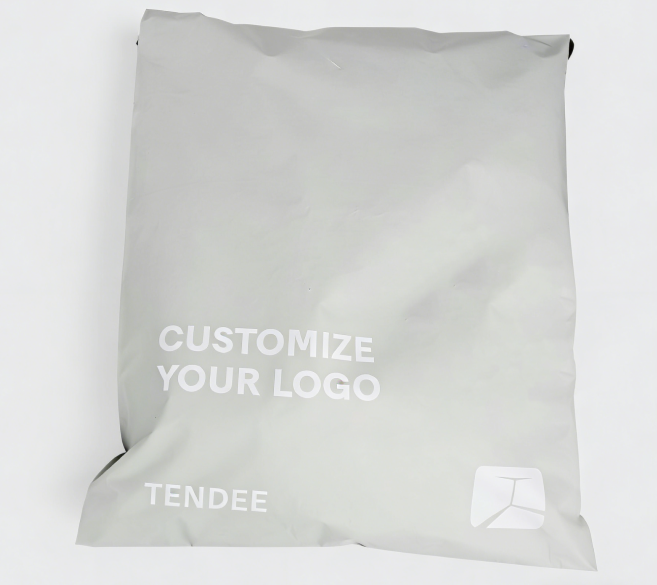
Custom poly mailer bags with logos take this a step further by incorporating your brand’s Visual Identity (VI). They feature your brand logo, social media handles, eco-friendly slogans, or unique brand illustrations printed directly onto the surface. This successfully transforms a simple shipping tool into a low-cost, high-return brand marketing asset.
Why Choose Custom Poly Mailer Bags with Logos?
With traffic costs skyrocketing today, packaging is no longer just a “logistic utility”, it is a highly cost-effective marketing tool. Here are the 5 core reasons why cross-border e-commerce, DTC brands, and independent store sellers are switching to custom branded mailers:
1. Instant Brand Recognition
The moment a consumer receives a package, the packaging becomes the brand’s first business card.
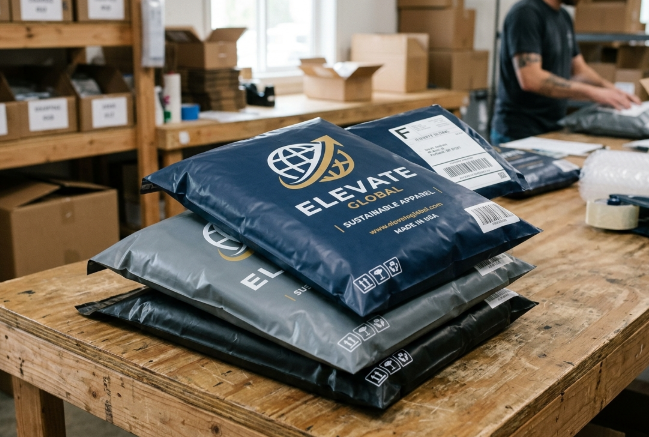
A Moving Billboard: Customized poly mailers with your logo, color theme, and slogan ensure that your product package is unique among the thousands of other similar looking packages.
Affordable Visual Promotion: While online promotion is costly, this kind of visual presence in the whole logistic chain from warehouses and couriers to consumers is free marketing in the private domain.
2. Ignition of Social Media Unboxing Experiences
In an era of experience economy, “unboxing” has evolved into a form of social currency.
Shareability: An extremely aesthetically pleasing and well-designed shipping bag strongly excites the urge within consumers to take pictures and share them organically across social media channels such as Instagram and Tiktok.
Creating Value for the Brand: The ritual of unboxing immediately elevates the customer’s perceived value of the product, leading to repeat purchase rates.
3. Substantial Cost-Effective Packaging Advantages
For e-commerce sellers shipping hundreds or thousands of packages daily, custom shipping bags directly boost profit margins compared to traditional cardboard boxes:
Lower Shipping Fees: Being extremely lightweight, they add virtually no extra weight, significantly reducing shipping fees driven by dimensional weight overages.
Reduced Warehousing Burden: They store completely flat, occupying only 1/10 of the warehouse space required by cardboard boxes. This drastically lowers real estate and storage costs for both overseas and self-operated warehouses.
Lightning-Fast Packing: Equipped with a “peel-and-seal” heavy-duty adhesive strip, they eliminate the need for extra tape, boosting packing efficiency by 200%.
4. Robust Waterproof and Tear-Resistant Protection
Qualified poly mailers are engineered from premium polyethylene (PE) materials, delivering exceptional structural protection:
All-Weather Protection: These pouches have excellent resistance to water, moisture, dust, and wear and tear.
Tamper-Proof System: The tough destructible seal that can be used only once makes it an effective way to safeguard against any theft or tampering during shipment of items like clothes, shoes, books, etc.
5. Establishing Professional Brand Trust
Consumer psychology is straightforward:
Custom Packaging = An established, well-funded, legitimate brand with reliable customer service.
Generic Plain Bags = A small, untrusted workshop that could disappear at any time.
By customizing mailers with your logo, you instantly separate your brand from the competition, giving overseas consumers peace of mind and fostering long-term brand loyalty.
Comparison Table: Custom Poly Mailers vs. Traditional Shipping Boxes
| Dimension | Custom Poly Mailers | Shipping Boxes |
| Unit Cost | Extremely low (as low as a few cents per piece) | Higher (typically dozens of cents to several dollars per piece) |
| Shipping Weight | Extremely light (adds virtually zero postage) | Heavy (prone to overweight or dimensional weight surcharges) |
| Storage Space | Minimal (stored flat, taking up negligible space) | Large (remains bulky even when folded flat) |
| Waterproof Performance | Excellent (100% waterproof and moisture-proof) | Poor (softens easily when wet, risking damage to contents) |
| Best Suited For | Apparel, footwear, accessories, books, and non-fragile items | Glass, electronics, cosmetics, and fragile goods |
Common Poly Mailer Bag Materials
Different products have completely distinct requirements regarding protection strength, budget, and eco-friendly properties. Choosing the right material ensures you balance shipping costs while showcasing your brand’s values. Here are the 4 core materials dominating the global e-commerce packaging market:
1. LDPE (Low-Density Polyethylene)
LDPE is the most widely used and classic raw material for shipping bags worldwide. Its molecular structure grants it exceptional flexibility.
Core Characteristics: Soft texture, smooth feel, inherently high toughness, and strong waterproof/dustproof capabilities. Due to its stable surface tension, LDPE perfectly reproduces complex logo colors and fine printed designs while remaining highly cost-effective for mass production.
Best Use Cases: Ideal for apparel, T-shirts, hoodies, underwear, towels, and boxed footwear, essentially any non-fragile, squeeze-resistant textile products. For the vast majority of growing cross-border e-commerce and independent store owners prioritizing ROI, LDPE is the golden standard.
2. Co-extruded Poly Mailers
Co-extruded mailers are manufactured using multi-layer composite extrusion technology (most commonly featuring a white exterior and black interior). By fusing different plastic resins together in a molten state, they achieve physical performance levels unmatchable by single-layer materials.
Core Characteristics: These products have exceptional tear resistance, puncture resistance, and outstanding load carrying ability. Most notably, their key attribute is the “white on the outside, grey/black on the inside” structure where the opaque dark-colored interior provides 100% privacy protection making it impossible for anyone to see the items inside.
Best Use Cases: The ideal choice for international shipping, cross-border e-commerce small packs, and long distance transport/shipping by sea. Great for shipping items that have sharp corners (such as electronic equipment, hardware, or books).
3. Recycled Poly Mailers (Recycled PE)
Given the ongoing trends towards reduced usage of plastics around the globe, Recycled PE (usually divided into PCR – Post-Consumer Recycled, or PIR – Post-Industrial Recycled) have gained attention as the key focus area in supply chain innovation. These materials are made through the process of recycling, cleaning and granulating waste plastics.
Core Characteristics: Maintaining 80% to 90% of strength and water resistance of regular LDPE plastic, they are extremely resource efficient and sustainable, allowing the use of eco-certification labels such as “Made from 50%/100% Recycled Material”. This is possible with the help of current technological advancements.
Best Use Cases: Very suitable for companies who want to sell in Europe and North America markets with strict environmental laws (like the German Packaging Act and Plastic Packaging Tax of UK). This is an ideal material for matured brands expanding globally and needing enterprise ESG compliance.
4. Biodegradable Mailers
For brands who choose to position their products as premium, natural, or highly eco-friendly, using 100% biodegradable substances that have been created by combining PLA (Polylactic Acid) + PBAT (Polybutyrate Adipate Terephthalate) and cornstarch is recommended.
Core Characteristics: In certain industrial and domestic compostable environments, this substance decomposes completely into water and carbon dioxide within several months without any microplastics and contamination of the environment. It has a more premium and softer matte finish than ordinary plastics.
Best Use Cases: Despite having higher production and raw material costs, it is heavily favored by premium organic clothing brands, designer labels, baby products, and sustainability-focused DTC brands. Printing green certified compostable logos on the bag instantly wins consumer affinity.
Common Sizes and Thickness of Custom Poly Mailer Bags
Common Size Chart
Poly mailer dimensions are typically standardized internationally in inches. When selecting a size, it is recommended to choose a bag at least 1 to 2 inches larger than your product’s flat dimensions to account for the thickness of the item.
| Size (Inch) | Equivalent (cm) | Applications & Best Suited Products | Scenario Description |
| 6 × 9 | 15.2 × 22.8 | Jewelry, earrings, socks, small cosmetics, keychains | Best for ultra-light, ultra-small non-fragile items; saves massive postage. |
| 7.5 × 10.5 | 19.0 × 26.6 | Phone cases, single skincare items, CDs, silk scarfs | Slightly larger than the base option; perfect for premium small items. |
| 9 × 12 | 22.8 × 30.5 | Summer T-shirts, tank tops, shorts, single baby clothes | The most common go-to size for summer e-commerce essentials. |
| 10 × 13 | 25.4 × 33.0 | Shirts, light hoodies, knitwear, dresses, jeans | The all-around champion size; fits almost any single piece of spring/summer apparel. |
| 12 × 15 | 30.5 × 38.1 | Hoodies, thick sweaters, two-piece sets, small boxed shoes | Designed for thicker, medium-volume folded apparel. |
| 14 × 19 | 35.5 × 48.2 | Jackets, winter coats, blankets, backpacks, multi-item bundles | Tailored for large items or bundling multiple products in one shipment. |
| 19 × 24 | 48.2 × 61.0 | Down jackets, padded coats, pillows, large plush toys | Oversized bags suited for bulky, fluffy, or heavy goods. |
Thickness Guide
The thickness of shipping bags is generally expressed in Microns (μm) or Mils (a common North American unit).
Conversion formula: 1 Mil ≈ 25.4μm
Thicker is not always better; selecting the appropriate thickness ensures transport security while avoiding material waste and excess shipping weight costs.
2.0 Mil (approx. 50 μm)
Features: Thinner texture, exceptionally low cost. Suited for lightweight items with low puncture risks.
Applications: Socks, underwear, small accessories, soft items without sharp edges.
2.3 Mil – 2.5 Mil (approx. 60 – 65 μm)
Features: The most widespread standard in the market. It perfectly balances flexibility, protective strength, and high economic efficiency.
Applications: T-shirts, button-downs, dresses, and standard daily apparel.
2.7 Mil – 3.0 Mil (approx. 70 – 75 μm)
Features: Offers a noticeably thick and premium tactile feel with robust tear resistance. It prevents punctures even if the product features rigid packaging (like a cardboard box).
Applications: Jeans, cosmetics in hard packaging, lightweight shoe boxes, books.
3.1 Mil – 4.0 Mil+ (approx. 80 – 100 μm+)
Features: Heavy duty or extra thick grades; mostly found in multi-layer coextruded films or high-end brands. Designed for tough logistical conditions and rough handling.
Applications: Winter coat material (down coats/overcoats), hardware parts, electronic equipment outer packaging, and ocean shipments for long distance international travel.
Custom Poly Mailer Bags: Common Printing Techniques
Different printing methods come with distinct Minimum Order Quantities (MOQs) and plate fees. Here is an in-depth analysis of the 3 major mainstream printing processes used in the global packaging industry:
1. Flexographic Printing (Flexo)
Flexible printing technology is the most prevalent among all plastic package printing processes. It involves printing of the fast-drying ink on plastic films by flexible relief plates created from rubber or photopolymer (similar to an enormous stamp roller).
Advantages: Exceptionally low cost at high volumes; ultra-fast production speeds. Flexo printing typically uses eco-friendly water-based inks or compliant solvents, making it highly sustainable.
Limitations: Can not produce complex gradient images and precise photo quality prints. Smaller lines in the graphic design will suffer from slight bleed.
Best Use Cases: Large-scale customization orders (MOQ: 5,000-10,000 pcs and above) with clean graphic designs including 1-2 color logo, text phrase, or block of brand color.
2. Gravure / Copperplate Printing
Gravure printing is a high-precision imaging method. The design is etched onto metal cylinders (steel/copper plates); the recessed cells hold the ink, which is then pressed directly onto the plastic surface.
Advantages: Extremely vivid colors with high ink saturation. It represents the gold standard for precision, effortlessly handling complex gradients, full-bleed backgrounds, intricate illustrations, and photo-quality visuals. When using Pantone solid colors, it achieves near-zero color deviation.
Limitations: Very high initial plate cylinder fees. Every individual color requires its own custom metal roller; if your design features 5 colors, the upfront setup investment will be substantial.
Best Use Cases: Full-bleed printing, massive background colors, premium streetwear labels requiring gorgeous artwork, or scaling DTC brands where large order volumes can easily dilute the upfront plate costs.
3. Digital Printing
Digital printing completely bypasses the traditional “plate-making” phase. A computer directly dictates high-speed industrial inkjet nozzles to spray ink onto the plastic film, operating much like a large-scale industrial document printer.
Advantages: Zero plate fees and ultra-low MOQs (as low as 100 or 200 pieces). Prototyping is incredibly fast (“what you see is what you get”), offering unmatched design flexibility. It supports full-color printing and complex gradients with no color count limits.
Limitations: Higher unit costs. Since plate costs are gone, the expense shifts to ink consumption and machinery wear, making it inefficient for massive, long-term bulk runs. Production throughput is also slower than flexo or gravure.
Best Use Cases: Startup e-commerce stores, testing new product lines, or designing limited-edition/holiday-themed packaging (e.g., Black Friday, Christmas).
How to Choose a Reliable Custom Poly Mailer Supplier?
Finding a reliable custom packaging supplier ensures your brand logo stays perfectly true to color while protecting you from peak-season stockouts and blown budgets. Whether you source via Alibaba, overseas directories, or local packaging brokers, evaluate them across these 5 core pillars:
1. Ensure MOQs Align with Your Growth Stage
MOQs are determined by the setup costs of their machines (flexo or gravure lines).
Startups/Testing: Focus on suppliers providing MOQs ranging from 500 to 1,000 pieces. These use digital printing machines, which means that although the unit cost is a bit more, there are no investments in stock.
E-commerce/Volume Ordering: Search for direct manufacturers providing MOQ of at least 5,000 or 10,000 pieces. The large quantity means getting access to traditional flexo or gravure production lines with pennies’ unit costs.
2. Evaluate Sampling and Proofing Capabilities
The supplier needs to prove what they say with proper proofing services before mass manufacturing starts:
2D/3D Digital Models: After placing an order, they need to quickly offer accurate 2D/3D digital models to check out the exact logo size, margins, and its position.
Stock Samples: You can ask them if they have any free stock samples produced earlier that you could examine regarding material thickness and quality, or alternatively get some customized physical samples for a small fee.
Proper Color Matching: An experienced manufacturer will ask for Pantone codes directly instead of using the screenshot of your phone; otherwise, this approach is very likely to lead to serious color mismatch.
3. Verify Material Supply Chains and Eco-Certifications
If you are exporting to Western markets, non-compliant plastic packaging risks heavy regulatory fines. Vet your suppliers for the following credentials:
Eco-Certifications: Can they provide globally recognized certifications? Look for OK Compost, BRC, or EN13432 for biodegradable offerings, and GRS (Global Recycled Standard) for recycled plastics.
Virgin vs. Regrind Materials: Explicitly ask if they use 100% virgin material or incorporate regrind (recycled scraps). Virgin material is odorless, smooth, and displays vibrant print clarity. Cheap, low-tier regrind often produces a pungent plastic odor and a dull, muddy base color.
4. Assess Physical Construction and Quality Control (QC)
A custom mailer must look great, but it has to survive the mail stream. Use these 3 highly professional questions to test a supplier’s quality control:
Adhesive Strip Strength: “Do you use destructive hot-melt glue?” Premium tape fuses within 1-2 minutes; any attempt to pull it apart tears the bag itself, ensuring excellent anti-theft security.
Side Seals: Are the side edges firmly pressed? Do they implement anti-burst sealing technologies? Request a video demonstration of their side-seam tensile pull tests.
Opacity: If you opt for white mailers, ask: “Is the interior layered with grey or black (co-extruded) to guarantee 100% opacity?” This prevents high-value apparel inside from being exposed through the bag.
5. Lock Down Lead Times and After-Sales Guarantees
The last thing an e-commerce business needs is a packaging stockout halting fulfillment. Before signing or paying, explicitly lock down:
Production Lead Time: Standard bulk manufacturing generally takes 7 to 12 business days. Confirm factory capacity schedules well ahead of peak seasons like Black Friday or Q4.
Manufacturing Tolerances: The plastic industry operates under a standard ±5% to ±10% quantity variance due to material waste during machinery calibration. A reputable supplier will explicitly state in the contract how shortfalls are refunded or offer free remakes if mass printing alignment or adhesive failure occurs.
Conclusion: Elevate Your Brand with Custom Packaging
Custom poly mailer bags with logos are far more than mere plastic sheets for holding garments; they are an extension of your brand identity and a secret weapon for driving low-cost repeat purchases and high-end unboxing experiences. Whether you are a fresh boutique owner launching on Shopify or a veteran power seller on Amazon and Etsy, right now is the perfect time to upgrade your packaging game!
If you are looking for a reliable manufacturing partner, Shine Pack is your premier choice. As a dedicated powerhouse factory deeply rooted in the custom packaging landscape, we are committed to providing global e-commerce sellers with premium-tier, low-MOQ, and 100% color-accurate poly mailer customization services! Let us help your brand stand out today.