Why Package Seal Integrity Testing is Your Top Priority?
So let us cut straight to it. If you are in the business of packaging food, pharmaceuticals, pet food, or pretty much anything that needs to stay fresh, safe, and intact, then package seal integrity testing is not just another checkbox on your quality list. It is the thing that stands between your product and a whole lot of trouble.
Let us start from the ground up: what is seal integrity testing, why it matters so much and how to conduct it effectively. Stick with me. We will cover all of it, including the nitty gritty methods, equipment choices, and early warning signs you absolutely cannot ignore.
What Is Package Seal Integrity Testing
Let us start with a clear definition.
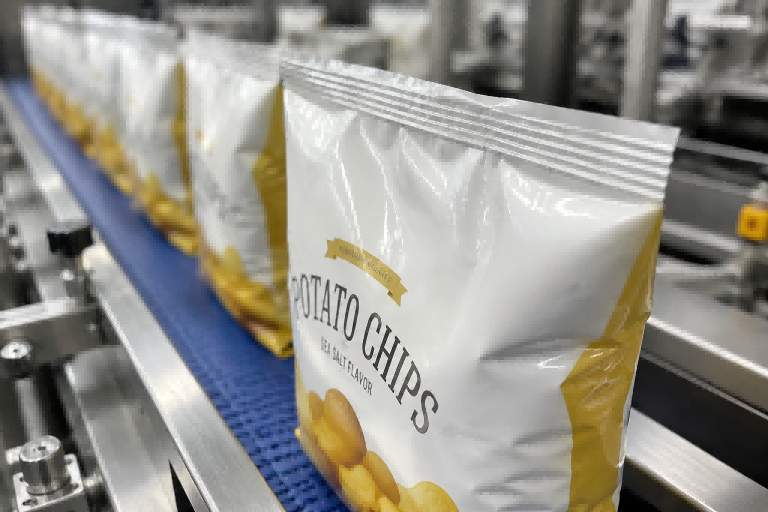
Package seal integrity testing is a set of physical, chemical, or mechanical techniques used to inspect the sealed areas of your packaging. We search for any small imperfections that cannot be seen with the naked eye: microsized pores, capillary channels or weak points where materials did not bond properly during heat sealing processes.
Imagine this as an intensive physical examination for your packaging.
The goal is simple. Keep outside air and bacteria out. Keep protective gases like nitrogen in. Maintain your product as intended.
Temperature, time and pressure all play an integral part in creating an ideal seal within a factory setting. Any deviation in these factors could potentially wreak havoc; even though everything appears fine on the outside, microscopically there could be tiny tunnels where air leakage occurs which allows air into the sealed compartment and cause major problems for production lines.
Why Package Seal Integrity Testing Matters
Okay, so why is seal integrity test methods such a big deal? Let me give you four real world reasons. These are not hypothetical. These are problems manufacturers deal with every single day.
1. Food Safety Risk
This is the scary one.
If your package has a hole larger than 11 microns, bacteria like Staphylococcus aureus and Salmonella can get in. That is tiny. We are talking about something you would never spot during a visual inspection.
And mold? That is another beast. Even a small leak can let moisture creep in and ruin the dry environment inside. Before you know it, your product is growing things it should not be growing. That is a health hazard, plain and simple.
2. Shelf-life Reduction
Let us talk about oxygen.
Food manufacturers commonly employ modified atmosphere packaging techniques for their snacks and nuts to keep their product fresh. If a seal develops a micro leak, oxygen may seep back into the environment causing fats to oxidize resulting in rancid, off flavors which no one wants.
Moisture can also be an issue. Products like coffee powder, milk powder or dried food readily absorb humidity through their seal. When this fails, the product clumps up quickly, loses texture and becomes unusable – drastically shortening shelf life from months down to weeks or even days.
3. Financial Loss
This one hurts the wallet.
If a whole batch goes out with bad seals, you are looking at a product recall. We are talking hundreds of thousands, maybe millions of dollars down the drain. And that is not even counting the brand damage.
Here is a real example. One snack brand had a problem with powder getting trapped in the seal. That created tiny channels. During shipping, the bags started leaking. Their e commerce return rate shot up to 8% overnight. Their profits took a massive hit that quarter. All because of a seal issue.
4. Compliance Risk
Regulators do not mess around.
For medical devices and high end food packaging, you need to meet standards like ISO 11607 and FDA requirements. If you cannot produce test data proving your seals are intact, your product will not clear customs. It will not get into major retailers. It is a hard stop.
So yes, package seal integrity testing is absolutely a top priority. Not optional. Not nice to have. Mandatory.
Which Packaging Bags Require Seal Integrity Testing
You might think this is only for high end medical stuff. Not at all.
Here is a list of common flexible packaging that absolutely needs regular testing:
Food packaging bags especially for snacks, meat products, and cooked foods. These need high barrier properties.
Coffee bags and stand up pouches often include one way degassing valves; should the seal leak, carbon dioxide could escape and diminish your coffee’s aroma.
Liquid packaging bags such as spouted pouches and juice bags contain liquid that must remain undisturbed, so even one leak could ruin an entire carton.
Vacuum packaging bags are typically used to package rice, meat and form fill seal products. Once the vacuum seal is broken, however, these products quickly lose their form and freshness.
Pharmaceutical blister packs and pouches for which sterility is critical require special consideration when packing for sale.
Pet food bags that stack well are typically large ones that can be placed directly onto pallets. The bottom bags bear a lot of weight. If the seal strength is weak, they burst open during transport.
So pretty much anything that is sealed needs testing. The question is, which method do you use?
7 Standard Seal Integrity Test Methods You Must Know

There are several established test methods, and they all follow international standards like ASTM. I have put together a detailed comparison table to help you see the differences at a glance.
| Test Method | How It Works | Destructive or Non Destructive | Best For | Standard |
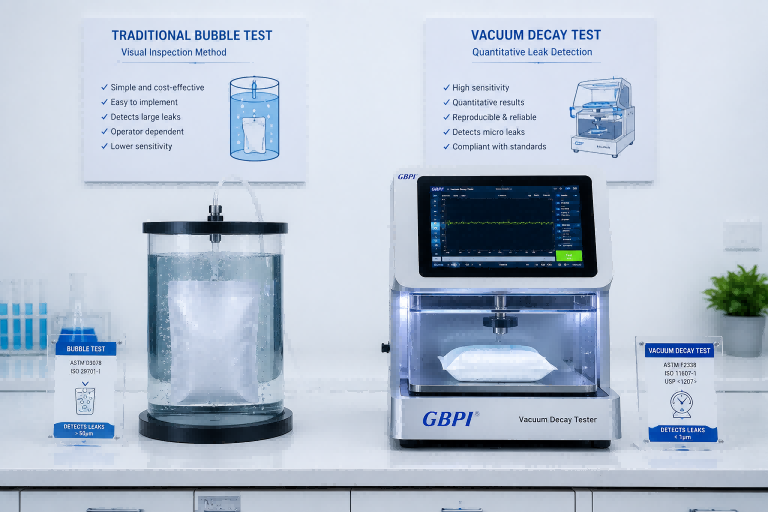
| Method 1: Vacuum Decay Test | Place the bag in a sealed dry chamber. Pull a vacuum. If the bag leaks, gas escapes into the chamber and causes a tiny pressure change. The instrument detects that change and calculates the leak rate. | Non destructive. Product stays intact. | Dry foods, powders, pharmaceuticals, high value electronics. | ASTM F2338 |
| Method 2: Pressure Decay Test | For rigid containers like bottles or jars. Pressurize the container with air and monitor for pressure drop. A drop means there is a leak. | Mostly non destructive. | Beverage bottles, cosmetic jars, rigid plastic cases. | ASTM F2095 |
| Method 3: Bubble Emission Test | A classic method. Submerge the bag in water and pull a vacuum above it. The bag expands, and if there is a leak, bubbles stream out from the faulty spot. | Destructive. Bag gets wet and product is ruined. | Low cost factory spot checks, detecting gross leaks. | ASTM D3078 |
| Method 4: Dye Penetration Test | Apply a high penetrant blue dye solution to the seal area. Let it sit. Then visually check if the dye has migrated through the seal. | Destructive. Packaging gets stained. | Pharmaceutical sterile pouches, transparent soft packaging. | ASTM F1929 |
| Method 5: Helium Leak Detection | A high end method. Fill the package with helium gas. Use a mass spectrometer to sniff for helium escaping. Since helium atoms are tiny, even a microscopic leak gets caught. | Non destructive. | Aerospace, implantable medical devices, ultra high precision applications. | ASTM F2391 (highest sensitivity) |
| Method 6: Burst Test | Inflate the bag like a balloon until it bursts. Record the pressure at which it ruptures. | Destructive. It will burst. | Evaluating seal strength and maximum pressure tolerance. | ASTM F1140 |
| Method 7: High Voltage Leak Detection (HVLD) | For liquid filled packages. Pass the package through a high voltage field. If the seal leaks, the liquid conducts electricity and triggers a current change. | Non destructive. | Liquid pouches, ampoules, IV bags, conductive liquids. | Suitable for non destructive testing of conductive liquids. |
Each method has its place. The trick is picking the right one for your specific product and production environment.
How to Choose Package Seal Integrity Testing Equipment
Now, the equipment market is wide. Prices range from a few hundred bucks to tens of thousands of dollars. So how do you decide?
Here is a practical framework to help you narrow it down.
1. By Packaging Type
For solid dry food products such as snacks, cookies and powders, a vacuum decay instrument or simple bubble test setup often suffices for testing purposes. If using modified atmosphere packaging with modified oxygen levels in mind, consider investing in a headspace analyzer as well.
For liquid packaging, go with HVLD or dye penetration tests. Vacuum decay is tricky with liquids because they can get sucked into the testing equipment.
For pharmaceutical grade packaging, helium leak detection is the gold standard. Sterility is non negotiable, so you need the highest precision.
2. By Production Scale
If you run small batches maybe a few hundred bags a day a manual vacuum chamber for bubble testing is perfectly fine.
For mass production lines at large food or dairy plants, you will want an inline automated system. These scan hundreds of seals per second as packages zip by on the conveyor. Any leaker gets automatically rejected.
3. By Accuracy Requirement
For basic QC where you just need to catch gross leaks, the bubble test gives you the best bang for your buck.
For high precision tracking, where you need actual leak rate data for your quality reports, go with vacuum decay or helium detection.
4. By Budget
On a tight budget, manual testing chambers cost a few hundred dollars. Good for startups or occasional checks.
If you have more to spend, automated smart systems run into the tens of thousands. But they save you money in the long run by reducing manual labor and cutting down on returns.
4 Real Test Methods for Early Seal Failure Identification
Here is something a lot of people overlook. You do not have to wait for customer complaints to catch seal failures. You can catch them early, right on the production line. Here are four practical, step by step methods to do exactly that.
Method 1: Micro-leak Detection
Every morning, when the packaging machine starts up, grab the very first bags it produces. These are your first articles. Take them straight to the lab and run a dye penetration test using blue dye solution.
Why? Because invisible micro leaks are impossible to spot with the naked eye. If the dye seeps through, you know your heat sealing parameters are off. You can adjust temperature, pressure, or time before you produce thousands of bad bags.
Method 2: Seal Weak Spot Mapping
Sometimes the seal failure is not about the material. It is about the sealing jaws on your machine.
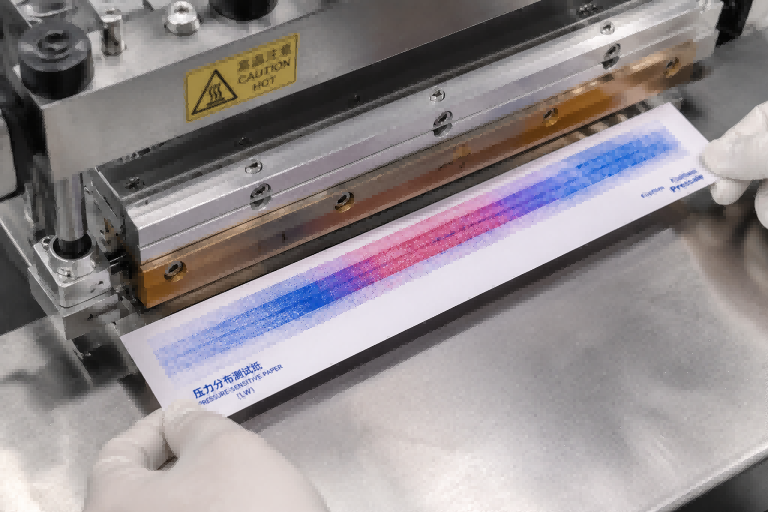
Here is a clever trick. Take a piece of pressure sensitive paper and place it between the sealing jaws. Run a cycle. Then pull it out and look at the color pattern. If one side is darker and the other is lighter, your jaw alignment is uneven. That creates weak spots. You need to realign the jaws and tweak the three variables: time, temperature, and pressure.
Method 3: Inline Monitoring Systems
Modern production lines can be equipped with real time QC monitoring. Every time the sealing jaw comes down, the system logs the actual temperature and pressure. If a cycle runs at a lower temperature, the system flags that specific bag. It can be automatically rejected before it even reaches the packing station. No human intervention needed.
Method 4: Sampling-based Testing
Set up a strict batch quality control schedule. For example, every two hours, pull five finished bags from the line and run a burst test. Inflate them until they burst. Watch where the break happens. If it splits at the seal under low pressure, your heat sealing strength is dropping. That is a red flag. Stop the line and investigate immediately.
These early detection methods are your safety net. They catch problems while you still have time to fix them.
How to Choose a Reliable Packaging Bag Manufacturer
Here is the thing. Even if you have the best testing equipment in the world, you are going to struggle if your packaging bags are poorly made. Inconsistent material thickness, weak lamination, or uneven coatings will cause failures no matter how good your machines are.
So how do you pick a manufacturer you can trust?
1. Manufacturing capability
Look for a supplier that has tight control over sealing layer technology. They should have precision blown film lines and bag making machines, plus a solid quality inspection system. They need to keep thickness variations within very tight micron ranges, especially at corners and folded edges. That prevents hot seal weak spots from the very start.
2. Testing standards compliance
A good manufacturer will provide full ISO and FDA compliance certificates for every batch. This proves the materials are safe for food contact and will not release harmful substances during heat sealing. It also confirms that the tensile strength and barrier properties meet specifications.
3. Material quality control
Most flexible packaging is not a single layer. It is a multi layer laminate. The quality of the adhesive bonding between layers matters enormously. If the lamination has bubbles or starts to delaminate, you will get interlayer leaks down the road. A reliable supplier controls their adhesive application process rigorously.
4. Seal integrity testing capability
This is a big one. It separates the pros from the small time operators.
A high standard packaging manufacturer will have their own in house testing lab. They use vacuum decay instruments, bubble testers, and burst testers to run their own batch inspections before anything ships out. That means the defect rate they deliver to you is already well below industry average. They have already done the hard work.
5. Customization ability
Your product is unique. Maybe you are packing oily coffee beans, or sharp boned pet food, or acidic liquids. A one size fits all bag is not going to cut it.
A good manufacturer will sit down with you and customize the size, thickness, and barrier structure based on your exact application. They tailor the solution so your product gets exactly the protection it needs.
Why Shine Pack Stands Out
Let me tell you a bit about ShinePack, because we genuinely fit this description.
ShinePack operates out of a 30,000 square meter modern facility with over 50 dedicated production lines. We have integrated sustainable material development with strict ISO 9001 and FSC certified food grade QC processes. What does that mean for you? It means we offer a complete turnkey OEM and ODM packaging solution. From concept design to laminate structure development to global delivery, we handle it all under one roof.
We reduce your procurement risk and save you the hidden costs of coordinating with multiple vendors. You get consistency, quality, and peace of mind.