
Tear Notch Packaging: 3 Types and How to Choose the Right One
A tear notch is a small cut on flexible packaging that lets you open it without tools. For food, coffee, pet food, and other brands, packaging must balance protection, strength, and convenience – too strong frustrates users, too weak risks damage. In custom flexible packaging , the notch isn’t random; designers consider material, thickness, seals, weight, and handling to ensure stability in transit and easy opening. This article covers tear notch packaging types, placement, material compatibility, and selection criteria. Let’s dive in.
What Is a Tear Notch in Packaging?
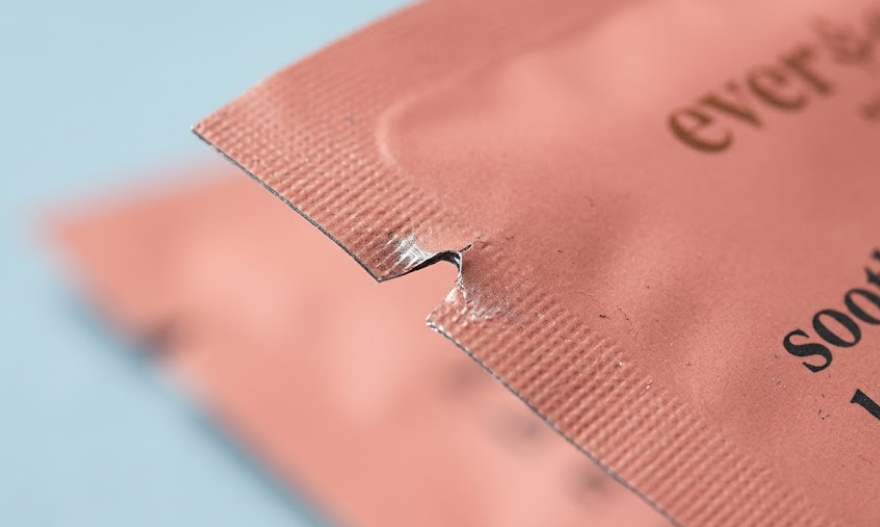
Tear Notch Definition
In plain English, a tear notch is a small cut or pre-weakened point on the edge of flexible packaging. Think of it as a starting line for tearing. Instead of hunting for the weakest spot on the film, consumers just grab the notch and pull. The package then opens along a predictable path. You’ll find this on stand-up pouches, flat pouches, coffee bags, snack packs, and pet food bags. Pretty much everywhere in custom flexible packaging, really.
How Does a Tear Notch Work?
The principle ties directly to what the packaging industry calls tear propagation – that is, how a rip travels once it starts.
Modern flexible packaging is almost always a multi-layer laminate. For example, you’ve got PET on the outside for strength and print quality, aluminium foil in the middle for barrier protection, and PE on the inside for heat sealing. Without any opening aid, when you pull on the film, it might stretch or deform rather than tear cleanly. Not ideal.
Here’s what actually happens when a tear notch is added:
Stress concentration: When you pull sideways, the force focuses right at the tip of the notch. That’s where all the action starts.
Crack initiation: The local stress exceeds what the material can handle at that point, so the film breaks and creates an initial tear.
Propagation: As you keep pulling, the tear extends along the laminate’s natural direction or along a pre-set path.
By tweaking the notch shape, depth, position, and the film’s layer structure, packaging engineers can control exactly how that tear behaves. It’s a science, honestly.
Why Do Brands Use Tear Notch Packaging?
Adding this easy-open feature isn’t just a nice-to-have. There are real business and user-experience reasons behind it. Let’s break them down.
Better opening experience: It cuts out the hassle of hunting for scissors or struggling with the film. The opening process becomes intuitive and fast. No fuss.
Tamper–evident clue: Because the notch usually sits just below the heat seal, once it’s torn, you can’t miss it. That gives retailers and consumers a quick visual check if a pack has been opened before. It’s a simple but effective layer of security.
Accessibility matters: A smart design lowers the force needed to open, which helps older adults, kids, or anyone using the product on the go – say, outdoors or while travelling. If you’re using FDA-approved materials for custom food pouches, the easy-open feature often needs to work hand in hand with material safety compliance. That way you boost overall usability without cutting corners on safety.
3 Types of Tear Notch Designs: V-Shape, U-Shape, and Laser Scored Lines
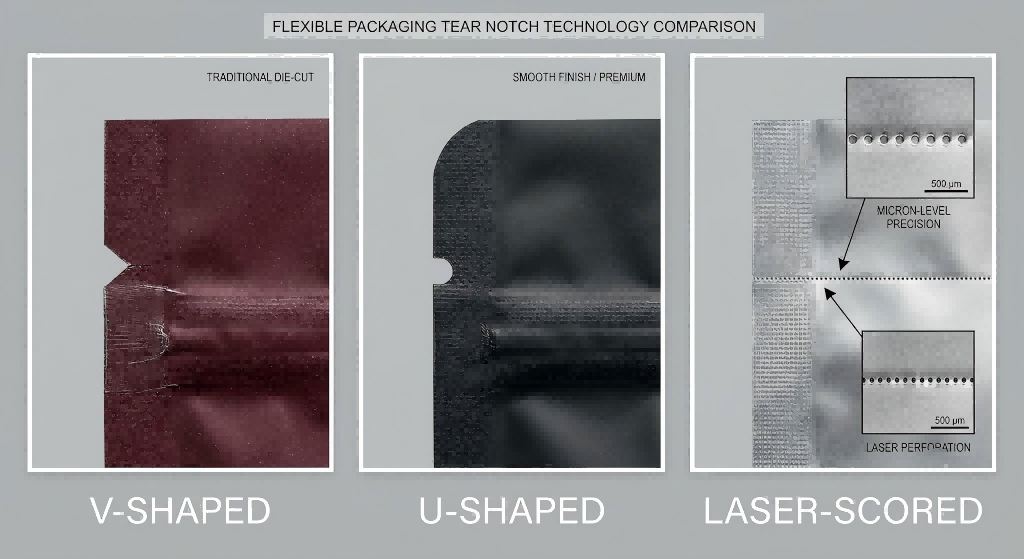
In custom flexible packaging, the choice of opening mechanism depends on product positioning, production cost, and material behaviour. Today, the market mainly uses these three approaches. Here’s what you need to know about each.
1. V–Shaped Design
This is the most common basic design out there. It’s a sharp, triangular cut on the edge. Simple and effective.
Process traits: The structure is straightforward, and die-cutting tooling for this is very mature. In high-volume runs, it’s pretty much a standard configuration. It’s also very visible, so users spot it right away.
Best for: Snack bags, standard coffee pouches, pet food packaging – basically any mass-market consumer product.
2. U–Shaped or Rounded Design
Instead of a sharp V, this one has a smooth, rounded edge – almost like a tiny semicircle. It’s a bit more refined.
Process traits: It looks cleaner and more premium. Because there’s no sharp point, the edge feels less aggressive to the touch. It gives a gentler grip, which matters when people are handling the pack repeatedly.
Best for: Cosmetic sachets, face mask pouches, premium coffees, and any brand that cares about tactile detail and a polished finish.
3. Laser–Scored Tear Line
This is a precision opening solution. A laser etches a controlled depth into specific layers of the laminate, creating an easy-tear path while keeping the other functional layers largely intact. High-tech stuff.
Process traits: It significantly reduces mechanical tearing resistance, guides the rip along a very accurate track, and delivers a straight, neat opening. It also cuts down the risk of tearing off-course and ruining the pack.
Best for: Single-serve powder sticks, liquid spout pouches, and heavy multi-layer composite films.
Quick Comparison: Mechanical Notch vs. Laser Scoring
| Feature | Mechanical V-Shape / U-Shape Notch | Laser-Scored Line |
| Processing | Die-cut punching on the bag-making machine | In-line laser engraving system |
| Cost structure | Standard, very low cost per unit | Requires extra laser equipment; slightly higher cost |
| Tear path control | Only provides a starting point; rest depends on material | Full-path guidance, controls the direction |
| Tearing performance | Decent but can wander or go crooked | Clean, straight, and highly consistent |
Tear Notch vs Zipper Closure: How to Combine or Choose Them?
A lot of brands ask: should we go with a tear notch or a zipper? The honest answer is, they serve completely different jobs in the life of a package. They’re not really competing. They’re complementary.
Here’s a side-by-side look to help you decide:
| Feature | Tear Notch | Zipper Closure |
| Main purpose | First-opening ease | Resealing for multiple uses |
| Reusable? | No – it’s a one-time break | Yes – can open and close many times |
| Cost impact | Very low | Higher, because of extra components and assembly |
| Best suited for | Single-use products | Multi-use products |
How to combine them smartly
For single–use packs – say, a one-time face mask, a single-serve drip coffee bag, or a portioned sauce sachet. Once it’s opened, it’s finished. So you can just add a tear notch and keep costs lean. No need for a zipper.
For multi–use packs – like large coffee beans, bulk pet food, or share-size nuts. Here, the smart move is notch + zipper. Consumers use the notch for the first open, then rely on the zipper below to reseal and keep freshness for later servings. Best of both worlds.
Where to Put It? The Perfect Placement for Your Pouch Design
Placement should not be left up to chance. A poorly placed notch could weaken the heat seal, compromise barrier effectiveness or collide with zipper tracks – not an ideal situation!
Consider these practical guidelines: The exact distance from the edge must be adjusted depending on pouch size, seal area size and location, zipper position and material thickness – there’s no standard rule that fits everyone!
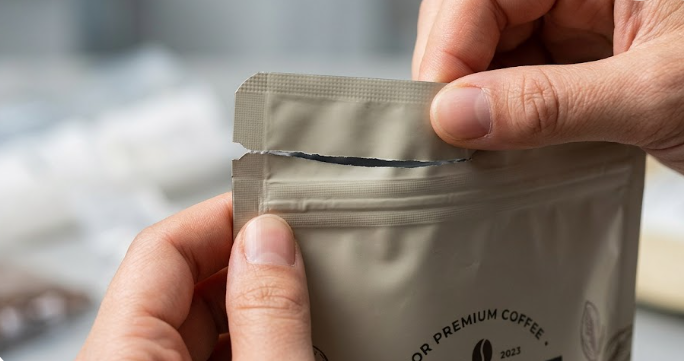
Notches on flat pouches without zippers typically appear at either of the top left or top right corners, with enough margin between it and the pouch edge for safe seal integrity testing. In order to do this, package seal integrity tests may need to be conducted periodically in order to make sure that die cuts don’t get too deep or off center and compromise seal integrity.
Stand-up pouches featuring zippers require the notch to align directly above the track of their zipper, with sufficient process space between this notch, the zipper track, and their top fin seals. We therefore aim for this result. That way, when the consumer tears off the top seal, the zipper below stays fully functional. No damage, no drama.
Which Pouch Materials Work Best with Tear Notches?
Not every film behaves the same way. The laminate structure has a huge impact on how well a tear notch actually works. Some materials are a dream to tear; others, not so much.
Materials with good tear propagation
PET/PE laminates: This is a classic combination. The PET outer layer gives stiffness and printability; the PE inner layer handles heat sealing. Together, they offer a predictable tear response. You know what you’re getting.
Aluminium foil composites (PET/AL/PE): These give excellent barrier properties. Aluminium has low elongation under stress, so once you have a well-designed notch, the tear tends to be quite stable. This is why you see them in high-end coffee and food packs that need light and moisture protection.
Kraft paper laminates: Paper fibres naturally tear in a directional way. Combining a notch and opening experience creates a natural, earthy aesthetic – making this option appealing for products aiming for an earthy appeal.
With increasing awareness for sustainability, more brands are opting for mono-material pure LLDPE recyclable pouches; great for the environment but difficult for tear notches.
Physical limitation: PE films are highly stretchable and tough, making traditional mechanical notches unsuitable for use on them as they will likely stretch and tear more easily than intended when consumers try to open them. They could result in stretching, difficulty tearing or stringy mess when opening them. The material just gives too much.
Industry fix: For mono-material PE structures, packaging suppliers typically evaluate whether to combine laser scoring or other easy-open techniques. The laser pre-reduces the tensile resistance along the tear path, so the elastic film tears more cleanly. Problem solved.
What Products Commonly Use Tear Notch Packaging?
Tear notch packaging isn’t limited to one industry. It’s everywhere. Here’s a quick tour of the main sectors that rely on it.
Coffee & Tea: Coffee packaging usually demands high oxygen barrier, so it often uses aluminium foil laminates. Coffee brands love tear notches because they preserve freshness while offering a convenient opening experience. That means less aroma loss when the pack is first opened.
Snacks & Nuts: Nuts, jerky, candies – these are all about grab-and-go consumption. Smooth, reliable opening directly impacts how convenient the product feels during daily use. Nobody wants to struggle with a snack pack on a hike.
Pet Food & Treats: Larger pet food bags are heavy, and they endure a lot of stacking and handling during shipping. So the notch depth has to be carefully balanced. It needs to survive warehouse stress but still open easily for the end user. It’s a fine line.
Supplements & Powders: Protein powders, meal replacements – these are used frequently and need good moisture protection. A stable, guided opening mechanism helps prevent spills or product waste when users open the bag with too much force.
How to Choose the Right Tear Notch for Custom Packaging?
When you’re actually sourcing custom packaging, how do you pick the right opening solution? Here are three core considerations from a technical and engineering standpoint.
Consider Your Product Type
The physical form and usage pattern of your product determine the protection level you need.
For heavy or bulky products (like pet food or large powder bags), the pack faces strong internal impacts during transport. In this case, a standard V–shaped notch needs tight depth control. You don’t want premature stress concentration that could cause failure during drop tests.
For single-serve solid powders, coffee sticks, or liquid-based products, you have to consider user behaviour. If customers apply uneven force, contents might splash or spill. That’s where laser–scored lines become the safer engineering choice. The guided path gives you more control.
Consider Material and Thickness
Material stiffness, elongation, and total thickness directly affect tearing resistance.
Traditional PET/PE or PET/AL/PE multi-layer laminates have good tensile strength. A standard V–shape or U–shape mechanical notch works just fine for first-opening.
However, if you’re going green with a mono-material LLDPE recyclable pouch, you’re dealing with a highly stretchable, tough material. A mechanical notch alone won’t cut it. You’ll almost certainly need laser–scored lines to pre-reduce the tensile resistance outside the heat seal. That ensures your pouches actually open properly after production.
Consider Customer Usage Habits
How your customers actually use the product matters. A lot.
For fast-moving consumer goods and mass-market snacks, where quick recognition and instant opening are key, the classic V–shaped notch offers the highest visual recognition and the lowest cost. People see it, they know what to do.
But if you’re in premium segments – think specialty teas, medical skincare, or single-serve dietary supplements – tactile details matter. A U–shaped notch delivers a smoother, rounded edge. It removes the sharp feel when customers grip the pouch, and that tiny detail can elevate your brand’s professional image.
Final Thoughts: Designing Your Flexible Packaging with Easy Opening
Designing the ideal opening design depends on several factors related to pouch style, material composition and how the product will actually be used. Consulting an experienced team before mass production can save a lot of troubleshooting; opening difficulties or structural failures that might otherwise arise could have been identified sooner.
Shine Pack provides reliable packaging manufacturing and technical support for product launch campaigns of all kinds – stand-up pouches, coffee bags, custom flexible packaging – with expert engineering team on call to evaluate material structure and opening solutions to make sure we find a good match before production begins. When planning new product launch initiatives or launches of existing ones, our engineering team provides die cut template drawings as well as sample references to get you up and running quickly and smoothly.