
Flat Bottom Coffee Bags: How to Choose the Best Custom Coffee Packaging
You know that packaging does more than hold beans, as a coffee roaster. It markets your brand before anyone takes a sip. And more speciality roasters are switching to flat bottom coffee bags right now. Not because they look nice (though they do). The actual causes are structural, logistical and financial. These bags help you win shelf space, justify a higher price and protect your roast longer. Let’s take this one step at a time.
What is a Flat Bottom Coffee Bag?
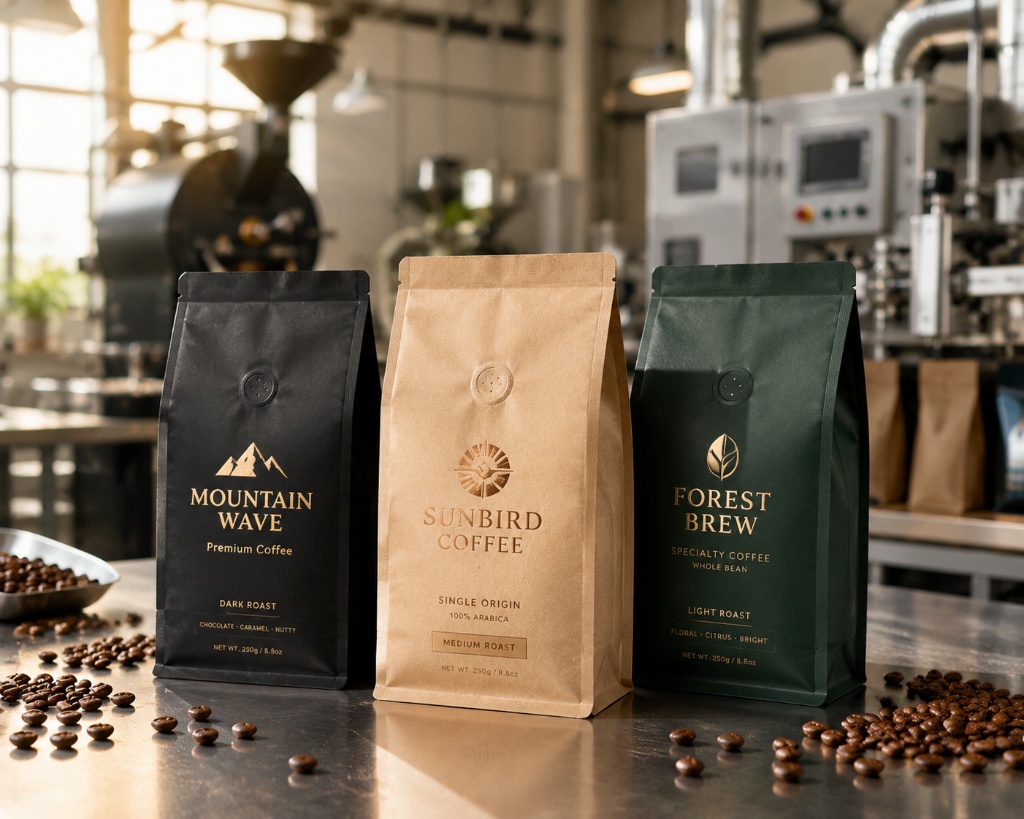
In simple terms, a flat bottom coffee bag is a stand‑up pouch that has been given a much more rigid, box‑like shape. Instead of a rounded bottom, it uses a five‑side sealing process that folds into a perfectly square base. You get a front, a back, two side gussets, and that flat bottom. The result looks like a small container.
But this isn’t flimsy paper or thin plastic. These bags are made from multi‑layer laminates—different materials like paper, plastic films, and foils bonded together with adhesives or heat. Each layer has a job. One blocks oxygen, another adds strength, and the inner layer keeps the coffee fresh.
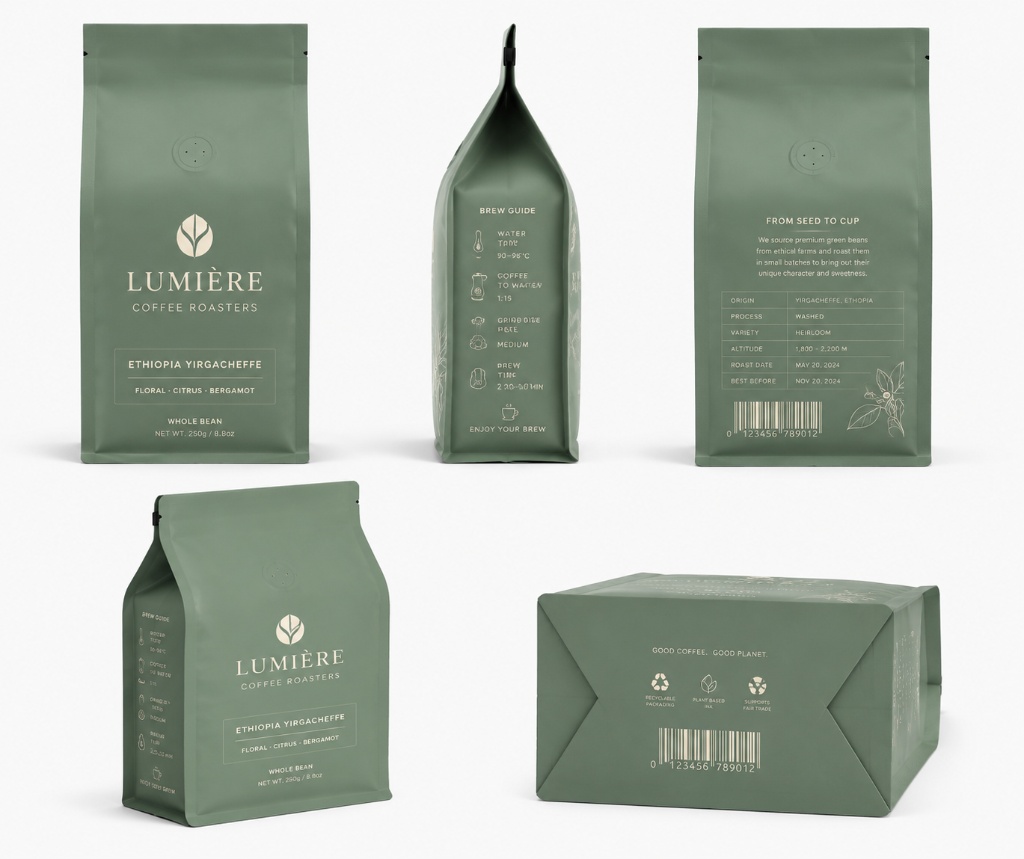
Now think about how your customers actually use the bag. Let’s say you are packing 12 ounces of roasted coffee. Most drinkers want to know how many cups they can get from one bag. That’s why it pays to understand how many cups of coffee in a 12 oz bag. You can print that number right on the side panel. Add a quick brewing guide or a suggested daily portion. That kind of detail tells your customers you care about their experience, not just moving product.
4 Huge Benefits of Using Flat Bottom Coffee Bags
Let’s address the elephant in the room. These bags cost a bit more per unit than standard pouches. But the hidden benefits often outweigh that extra expense. Here are four ways they can actually save you money and build your brand.
Maximum Stability
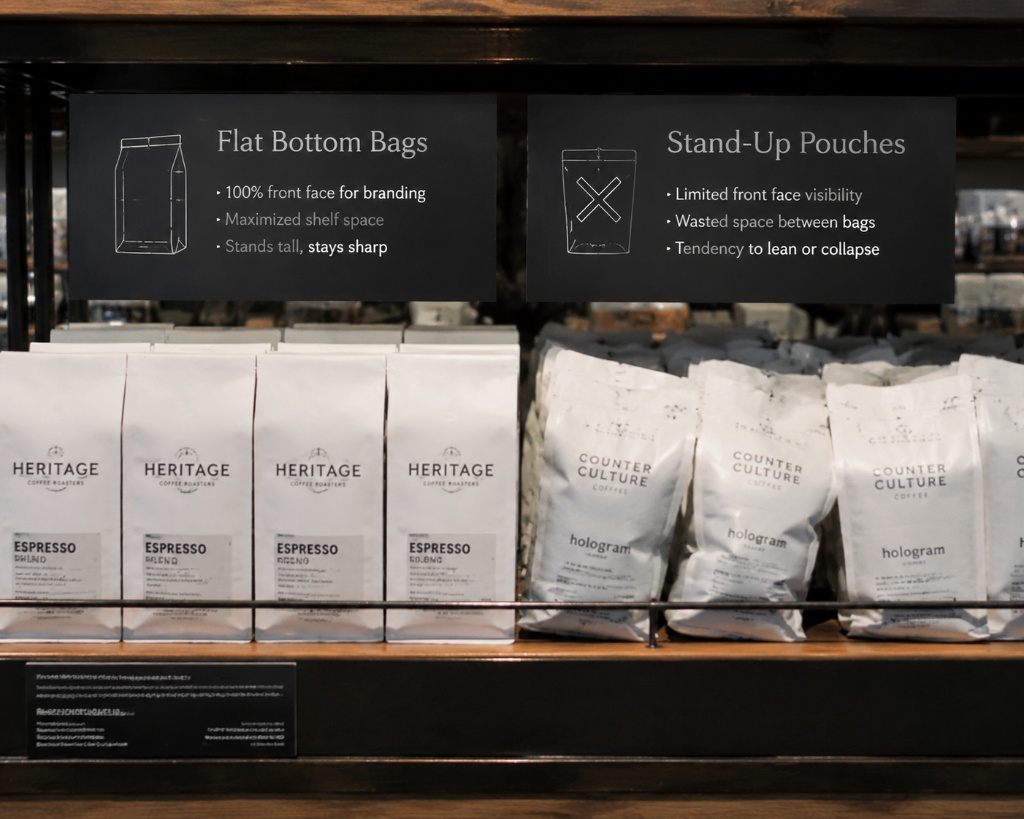
The square base gives the bag a very low center of gravity. Traditional stand‑up pouches have curved bottoms. When a shopper picks one up and puts it back, the pouch often tips forward. Soon the shelf looks messy. Flat bottom bags sit firmly. You can nudge them, rearrange them, and they stay upright. The front label always faces the customer. That small advantage improves how your brand looks in a crowded retail space.
30% Space Savings
Square, compact bags nest together with almost no wasted air. Every inch counts when you ship LCL (less than container load) in a shared container with other brands. And that blocky shape can save you some 30 percent in your freight and warehousing costs. That’s real savings over the course of a year.
5 Branding Billboards
Count the surfaces: front, back, left gusset, right gusset, and the bottom panel. All five can carry full‑color, high‑definition printing. Smart brands put their logo front and center. They tell their origin story on one side. They print brewing tips and tasting notes on the other. Barcodes and recycling symbols go on the bottom. That gives you more than double the messaging space of a two‑sided pouch.
Premium Vibe
Consumers are visual. When they see that structured, boxy shape, they don’t think about cheap commodity coffee. They think specialty, craft, quality. The same beans in a regular pouch might sell for $15. Put them in a well‑designed flat bottom bag, and you can easily ask for $25. The packaging signals value before anyone reads a single word.
Materials and Custom Options of Flat Bottom Bags
If you are the one placing the order, you need to be clear about three technical dimensions. These choices affect shelf life, appearance, and customer perception.
Material Structures
To keep roasted coffee fresh for more than a year, you need high‑barrier films. These are engineered to block oxygen, moisture, and UV light.
Classic Aluminum Foil Laminate – typically kraft paper, PET, aluminum foil, and food‑grade PE. It offers the best barrier available. Great for international shipping or long shelf runs.
Eco‑Friendly Mono‑PE – uses a single type of polyethylene. The advantage? It is fully recyclable without separating layers. A cleaner choice for brands that care about circular packaging.
Surface Finishing
This is what your customers feel when they pick up the bag. Texture says a lot about your brand.
Matt Finishing – a non‑reflective, muted surface. It feels sophisticated and understated. Good for minimalist or dark designs.
Glossy Finishing – bright, shiny, and reflective. Colors really pop. Best for youthful, energetic brands.
Spot UV – a clever mix. Keep the overall bag matte, then apply a glossy, raised coating on specific elements like your logo. Under store lights, those spots catch attention exactly where you want it.
Functional Add‑ons
One‑way Degassing Valves – an absolute must for fresh coffee. Roasted beans release CO2 for days. Without a valve, the bag inflates and could burst. The valve lets gas out while keeping outside air from getting in.
Pocket Zippers – the most popular closure today. Customers tear open the front strip, pour out what they need, and press the zipper shut. No extra clips or twist ties.
Applications of Flat Bottom Coffee Bags
Although we call them coffee bags, their strength and freshness protection have caught the eye of other premium food categories.
Specialty Loose Tea – delicate leaves like oolong or black tea are easily crushed. The rigid side gussets give the same protection as a cardboard box. Your tea arrives intact, and the aroma stays sealed.
Premium Pet Treats & Food – high‑end brands now use flat bottom bags for freeze‑dried meats and organic kibble. These bags handle heavy weights (1 kg to 5 kg) without the bottom tearing. The zipper makes daily feeding easy.
Organic Nuts and Granola – these products are lightweight but bulky. A flat bottom bag makes them look full and generous on the shelf. Compare that to a limp plastic bag, and the difference is clear.
Flat Bottom Bags vs. Stand-Up Pouches: Which One Should You Buy?
If you are comparing options with your team, here is a side‑by‑side breakdown. It covers production, storage, and brand positioning.
| Comparison Point | Flat Bottom Bags | Stand‑Up Pouches |
| Bottom Design & Look | Completely flat square base; gives a 3D box appearance | Curved, oval base; looks like a small dumpling when filled |
| Shelf Stability | Very stable; bags stay upright even when moved | Higher center of gravity; they can slump forward or collapse |
| Shipping & Storage | 100% space efficiency; can save up to 30% on freight | Tapered tops create wasted empty space in boxes |
| Printing Plate Cost | Five panels require more plate setups; initial tooling is higher | Only two main panels; setup is faster and cheaper |
| Total Cost Per Unit | Slightly more expensive; best for premium, higher‑margin lines | Much cheaper; ideal for mass‑market, high‑volume sales |
How to Choose the Right Sizes for Your Flat Bottom Coffee Bags?
This is where many new buyers trip up. They email the factory and ask for a bag that holds 12 ounces of coffee. Then they assume the factory will figure out the dimensions. But there is a catch.
Coffee has a volumetric expansion rate. When beans are roasted, moisture evaporates and the cell walls expand. The beans get larger and lighter. A 12‑ounce bag of dark roast will take up 15 to 20 percent more space than the same weight of light roast. Same weight, different volume.
If you order bags based only on weight, you might find that your dark roast doesn’t fit properly. The bag may not seal. Or the degassing valve could get blocked because the beans press against it. Before you send artwork to your supplier, look at the full range of coffee bag sizes. Check the length, width, and gusset measurements in millimeters. Match those numbers to your actual roasted coffee, not just your marketing weight. That one step can save you from scrapping an entire batch of packaging.
FAQ About Flat Bottom Coffee Bags
Q: Why are coffee bags not more popular?
Two main reasons: equipment costs and minimum order quantities. Making a five‑sided flat bottom bag requires a more specialized machine. Production is slower than standard pouches. That drives up the per‑unit price and the MOQ. For big brands that compete mostly on price, the math doesn’t always work. But for specialty roasters who can charge a premium for quality and branding, the investment usually pays off.
Q: What is the difference between V bottom paper bag and square bottom paper bag?
This confuses a lot of people coming from other industries. A V bottom paper bag is what you get at a bakery for a baguette or at a takeout place for fried chicken. It’s made of a single layer of lightweight kraft paper. The bottom folds into a narrow V shape. It has no sealing, no moisture barrier, and no freshness protection. A square bottom (flat bottom) bag, on the other hand, is a true industrial‑grade package. It uses multi‑layer lamination with high‑barrier inner films. The base is completely flat. It includes a precision degassing valve. It is engineered specifically to protect roasted coffee from oxygen and moisture.
Q: Which coffee bags are plastic free?
If you want to go completely plastic‑free to meet sustainability goals, the best current solution is a combination of natural heavyweight kraft paper on the outside and a plant‑based biodegradable liner on the inside. That inner liner is often made from PLA, derived from corn starch. The bag looks and feels like raw wood fiber, which appeals to eco‑conscious customers. The plant‑based liner still provides an excellent oxygen barrier. Under the right composting conditions, the whole bag breaks down without leaving microplastics behind. It also keeps the coffee flavor cleaner.
Conclusion: Get Custom Flat Bottom Coffee Bags Wholesale
Switching to flat bottom coffee bags isn’t just about hopping on a trend. For a brand that’s serious about growth, this is a strategic move. It helps you stand out on crowded shelves and supports a higher asking price per bag. Of course, custom packaging does come with its own set of questions. Minimum order quantities, plate setup fees, and tiered pricing structures – all of those are real factors you’ll need to weigh. Yes, you have to consider lead times and international shipping. But the payoff is real.
If you are planning your next quarter’s budget and need solid numbers on coffee bags wholesale standards, plate costs, and supply chain timelines, take a look at the industry benchmarks. They will give you a reliable reference. The right flat bottom bag can turn your packaging into a competitive edge that drives sales and builds customer loyalty, one cup at a time.